
Abstract:
The biggest news in the tech world today is that Tim Cook has officially stepped down as CEO of Apple. Actually this happened this year 4 It was officially announced in September, when Apple issued a press release saying that Cook would hand over the CEO position to John Ternus, senior vice president of hardware engineering, on September 1. ), Tony also told everyone about it at that time.
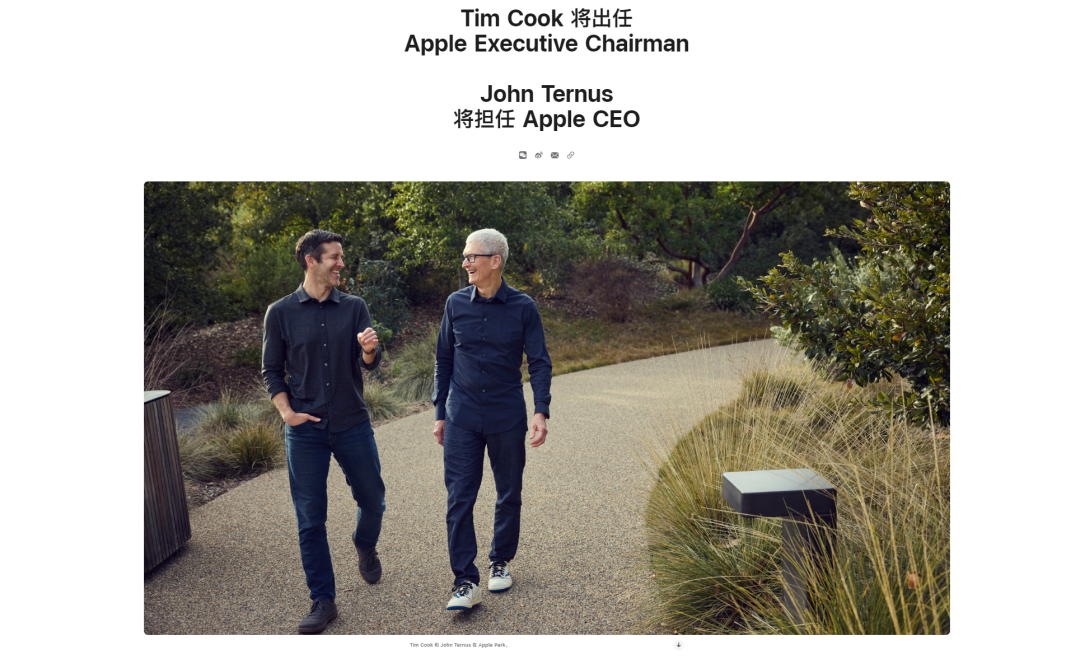
But the announcement is one thing. On this day, it still feels different.
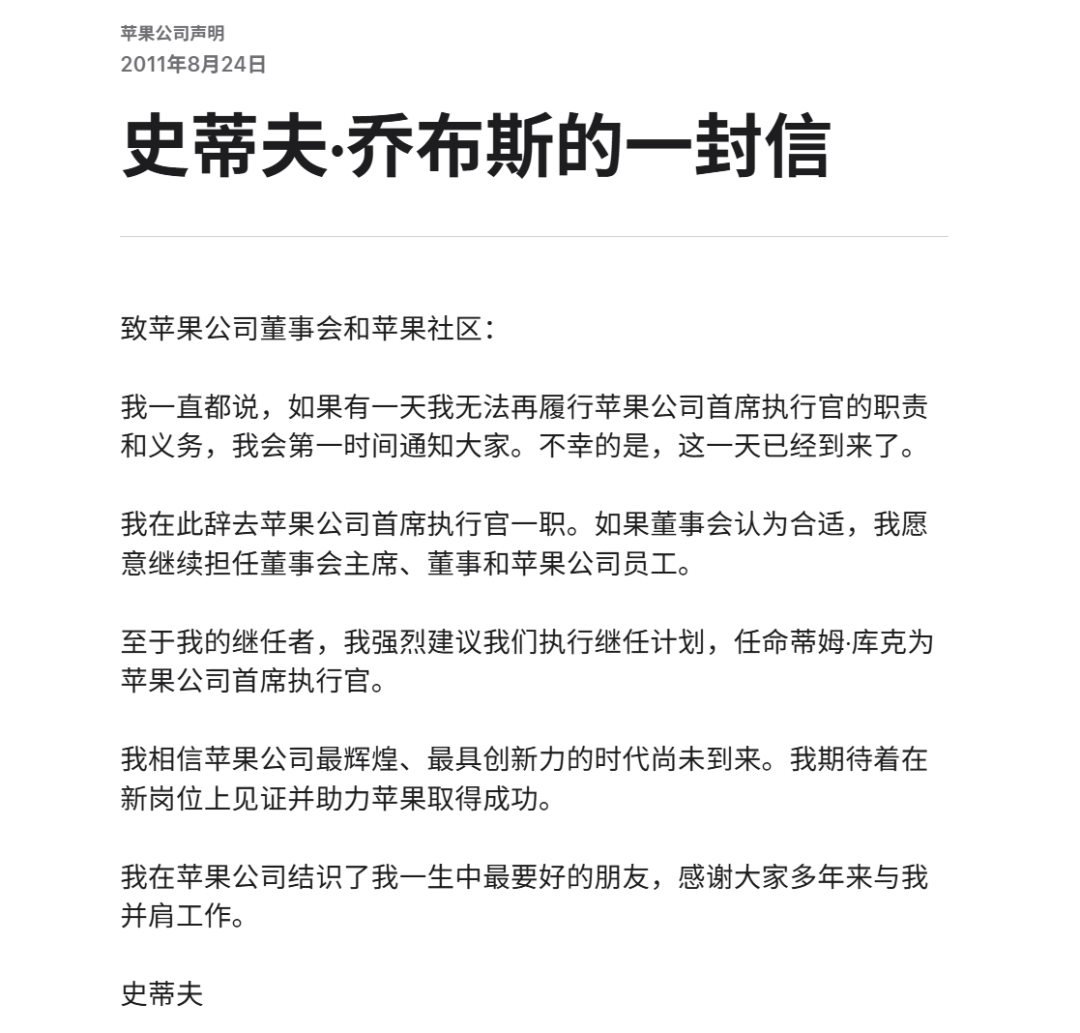
After all, it was a full 15 years - in August 2011, Jobs resigned and officially handed Apple over to Cook. At that time, Tony was still using iPhone 4 and was still struggling with whether to spend dozens of dollars to buy a game in the App Store.
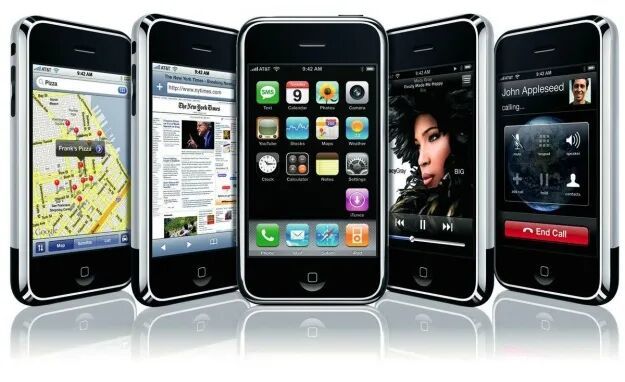
In the past 15 years, the iPhone has been updated from iPhone 4 to 17, accompanying a generation from campus to the workplace, and witnessing the explosion of the mobile Internet to maturity. For many people, the iPhone is the first digital product they come into contact with.
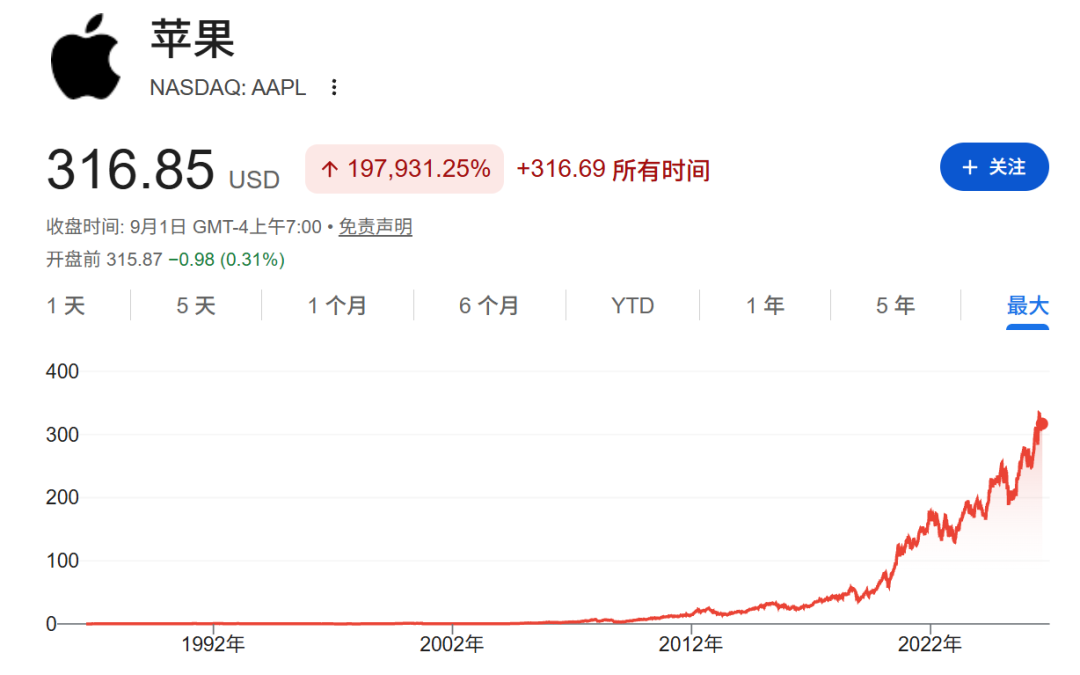
The Apple handed over by Cook is already a company with a market value that once exceeded US$4 trillion.
Compared with when it was taken over, the market value has increased more than 10 times, net profit has increased more than 4 times, and the overall revenue scale is close to 4 times that of the year. It is a well-deserved technology giant.
Although he has delivered an almost impeccable report card, every time we talk about Cook, the evaluation in the digital circle has always been quite divided.
Some people think that he is just a professional manager who sticks to the legacy built by Steve Jobs and lacks innovation; others think that he is an underestimated management genius. After all, if you look at the world, you can count the number of companies that can bring the market value of a company to 4 trillion on one hand.
Tony thinks that both of these statements are correct, but neither is complete. Today we will take advantage of his official handover to take a closer look at Cook's 15 years.
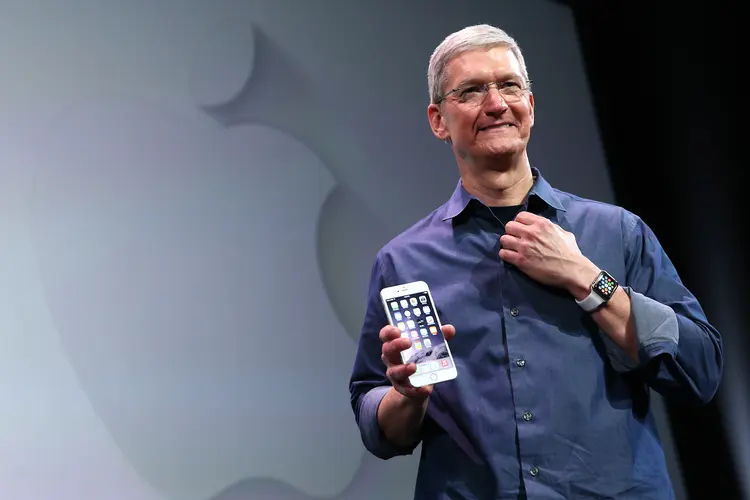
Go back to 2011, which was Apple’s most prosperous and most dangerous year.
What’s great is that the iPhone 4 has raised the ceiling of smartphones to a higher level. With retina screen, glass back cover, and multi-touch, any one of them is a dimensionality reduction blow. Apple has become synonymous with coolness and innovation in the eyes of many young people.
The danger is that Jobs' health could no longer hold on. In August of that year, he officially resigned as CEO and was replaced by Cook, the then chief operating officer.
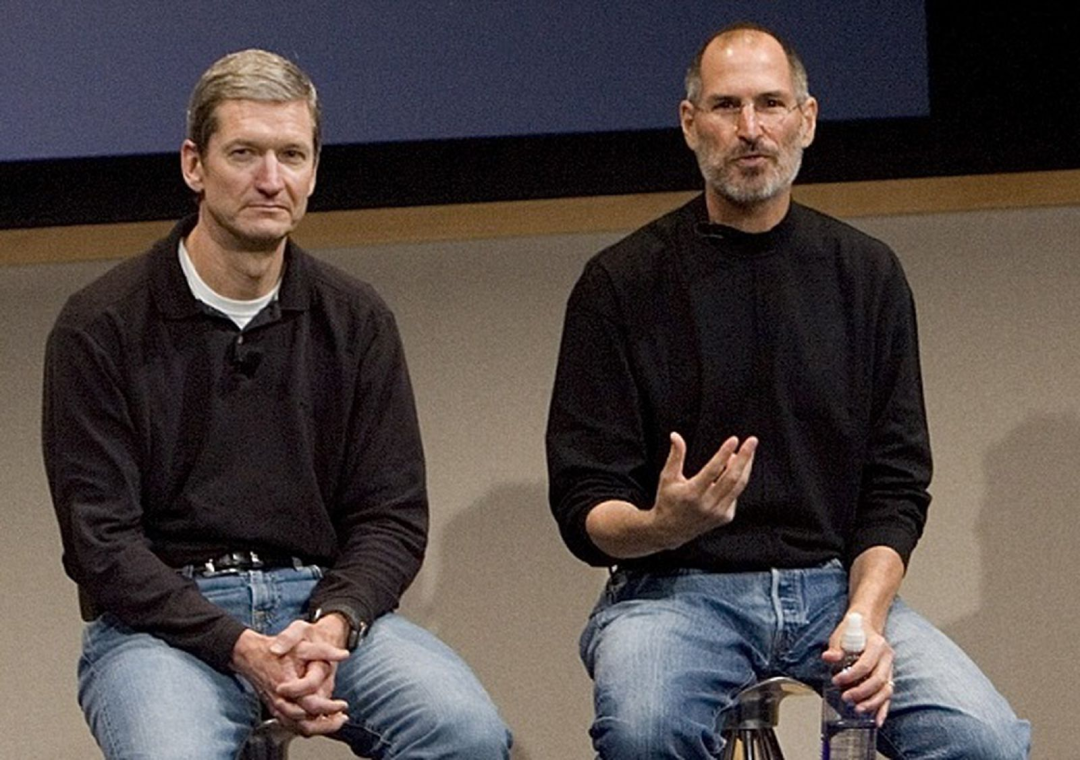
As soon as the news came out, the technology circle exploded. It's not that Cook is not good, but that in everyone's eyes, he and Jobs are not the same kind of people at all.
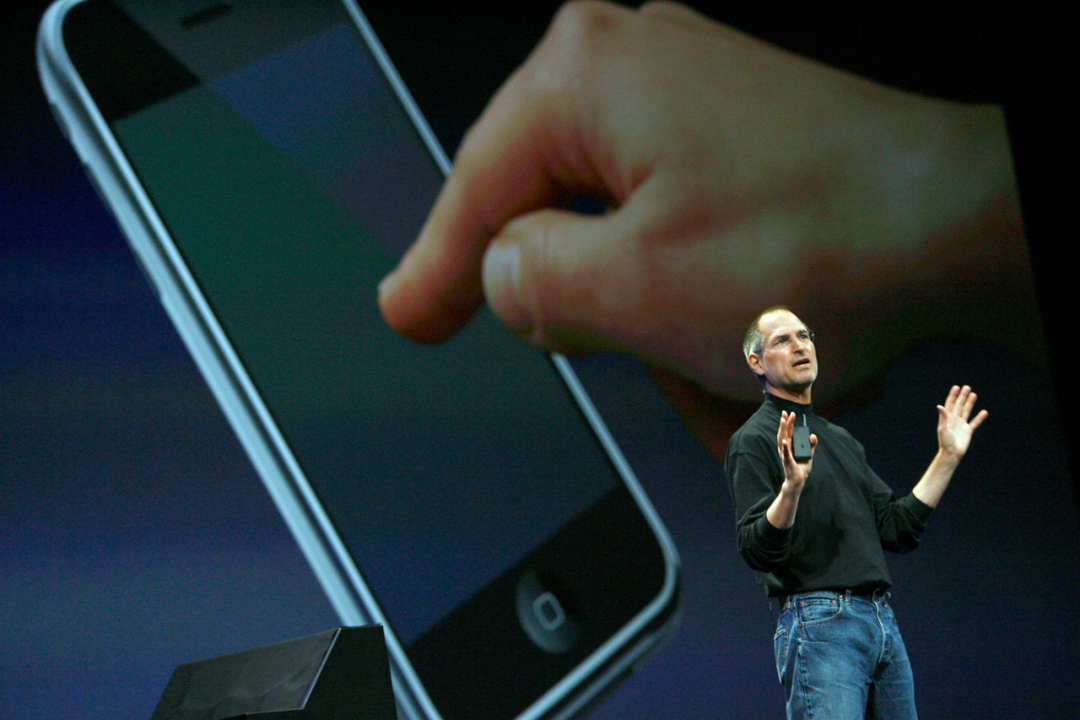
Who is Steve Jobs? He is a paranoid and perfectionist. He will ask the designer to make repeated modifications because he is not satisfied with the thickness of the lines and the size of the buttons. He will force the engineer to overthrow it because the circuit layout is not elegant enough, even if the user will never see it in his life.
His logic in making products is always "I want to give users the best things" rather than "I will do whatever users want."
What about Cook? He is a typical rationalist who has worked in the supply chain for more than ten years. He is best at calculating inventory, controlling costs, and improving efficiency.
It is said that when he first joined Apple in 1998, Apple’s inventory turnover cycle was 31 days. He first spent seven or eight months cutting it down to 6 days, and a year later it was reduced to 2 days. This was an almost impossible number in the consumer electronics industry at that time.
To put it bluntly, Jobs was good at creating amazing products from 0 to 1, while Cook was good at maximizing the advantages of the supply chain and making the most money. Precisely because their paths were completely different, no one thought Cook could take over the job well at the time.
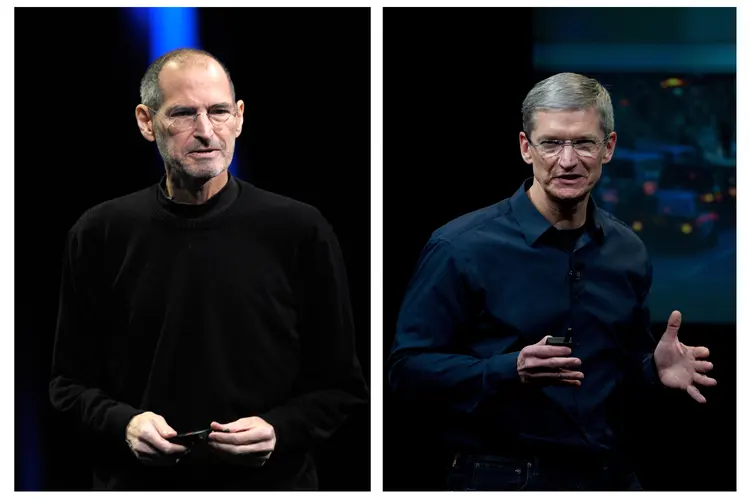
Looking back now, everyone underestimated Cook. He really couldn't become the second Steve Jobs.
But in his own way, he brought Apple to a height that even Steve Jobs had not reached.
After Cook took office, he did not make any big moves as a new official. Instead, he did a lot of things that were considered by others to be contrary to Jobs' philosophy. The most famous one was to reject Jobs's "ancestral precept" that "3.5 inches is the golden size."
Jobs publicly said many times during his lifetime that 3.5 inches was the perfect size for a mobile phone. As a result, the second year after Cook took office, he launched the 4-inch iPhone 5; with the iPhone 6, he also came up with two versions, 4.7-inch and 5.5-inch, completely embracing the big screen.
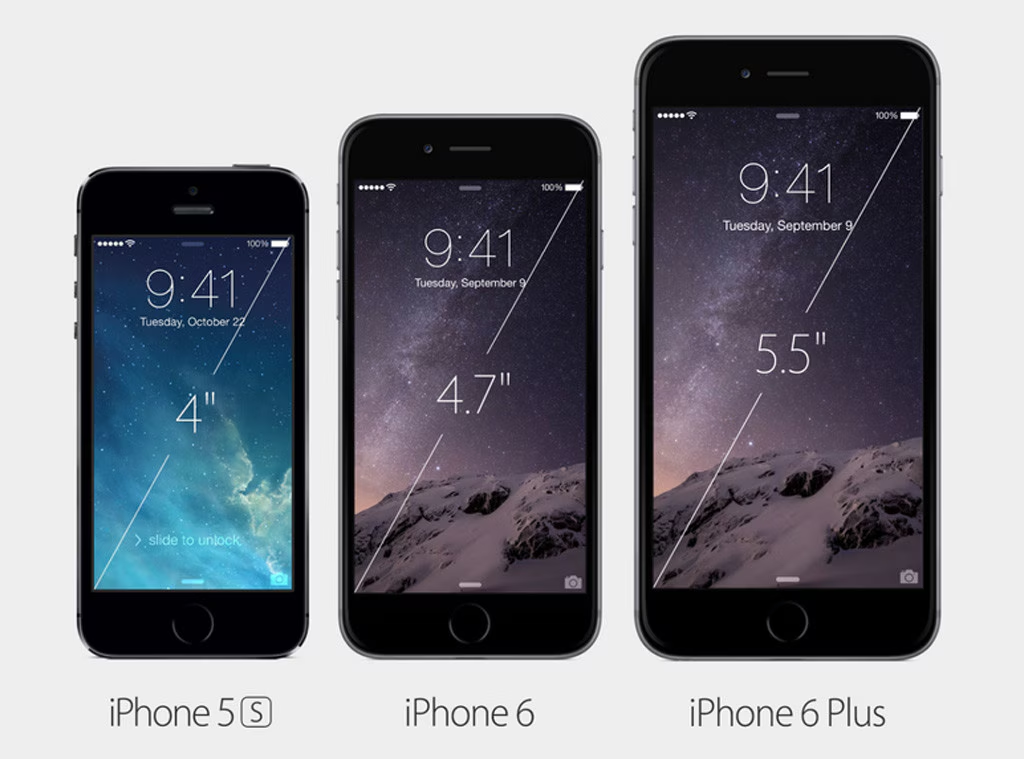
At that time, many Apple fans scolded him for losing Apple's original intention, but the market gave him the most real feedback: Global sales of the iPhone 6 series exceeded 220 million units, and it is still the highest-selling model in Apple's history, directly raising Apple's revenue to a new level.
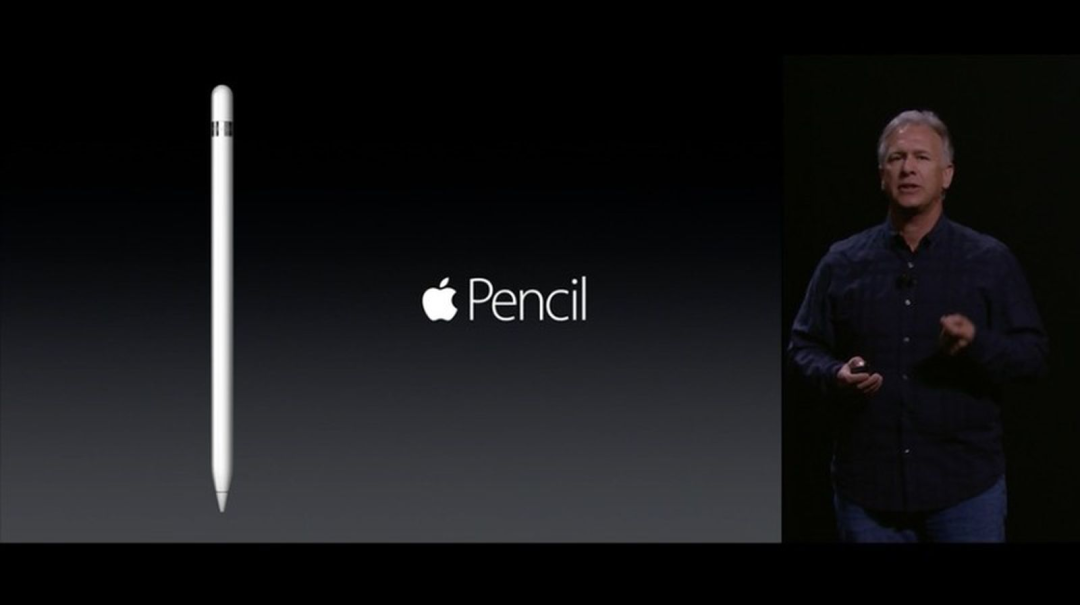
There is also the stylus that Jobs publicly mocked when he released the original iPhone, but Cook turned around and turned it into the strongest companion to the iPad.
When the iPad Pro was released in 2015, Apple took out the Apple Pencil, which provided a low-latency, pressure-sensitive experience. It not only became a drawing and note-taking tool for designers and students, but also transformed the iPad from an entertainment tablet into a productivity tool.
You can say that Cook did not follow Steve Jobs’ philosophy, but you have to admit that he really understands what consumers want
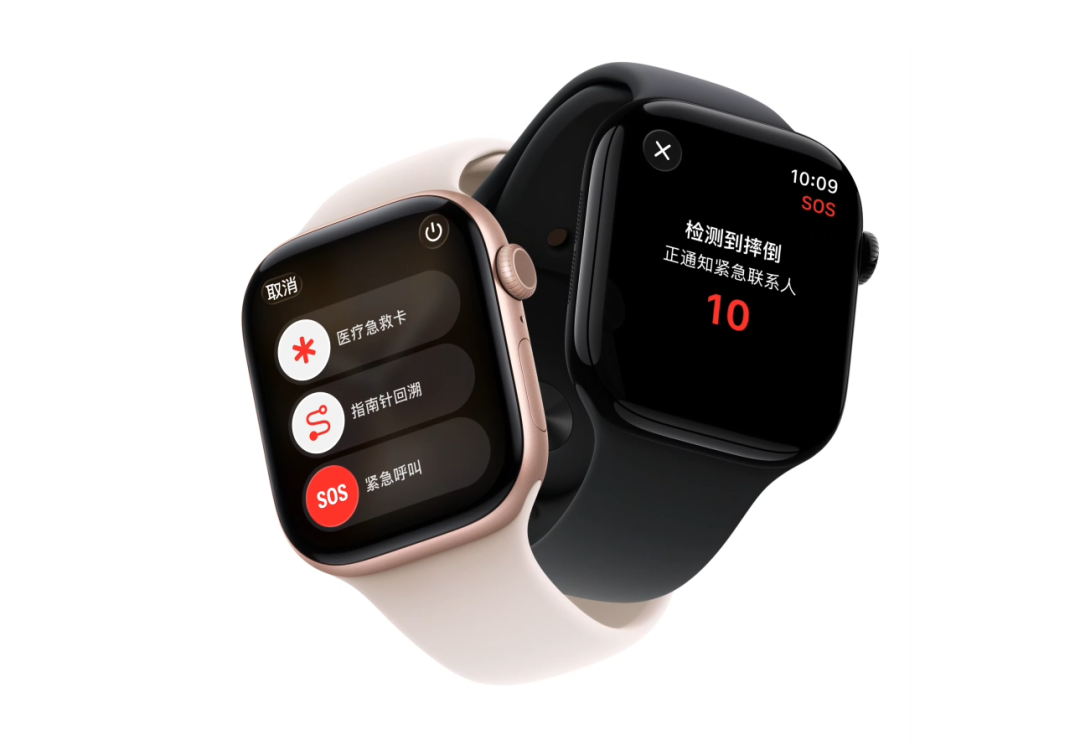
——The two most successful new categories in the Cook era were criticized on the Internet when they were first released, but they turned out to be "more fragrant" than the other.When Apple Watch was released in 2014, the whole Internet was complaining: it was a useless thing that only needs to be charged once a day, and it was useless except to pretend to be X...
What's the result? Apple Watch now firmly ranks as the top smart watch in the world, with more than 40 million units shipped every year. The number of units shipped exceeds the total export volume of the Swiss watch industry. Heart rate monitoring, blood oxygen detection, fall warning, and other health functions have also saved many people.
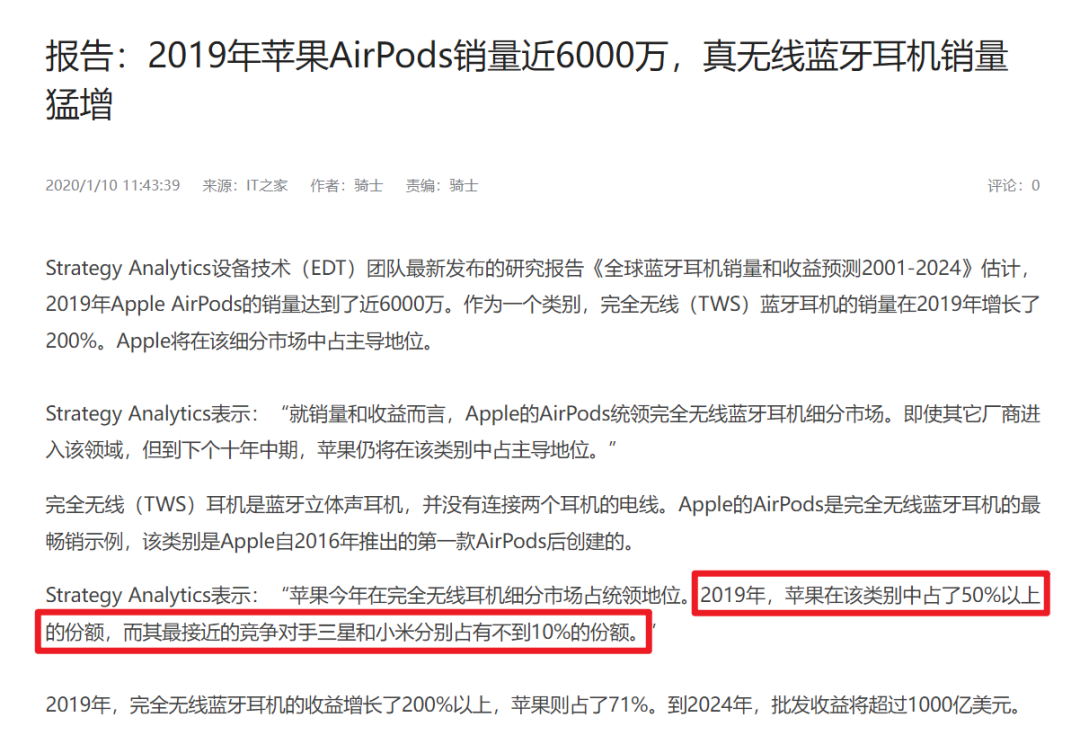
When AirPods were released in 2016, netizens laughed louder: they didn’t even know if they fell while walking, and the sound quality was not as good as wired headphones worth dozens of yuan...
What's the result? AirPods set the entire TWS headphone industry on fire. At its peak, one out of every two pairs of true wireless headphones sold worldwide was AirPods. The peak annual revenue of this category alone exceeded US$20 billion, which was larger than the annual volume of many listed companies.
Many people say that Cook has no innovation, but this is his greatest strength:
He does not need to be the first to do it, he just needs to see the right direction, and then use Apple's supply chain, ecosystem and brand to make his own products the first in this track, and then earn most of the profits.
This is true for Apple Watch and AirPods, and it is also true for self-developed M series chips.
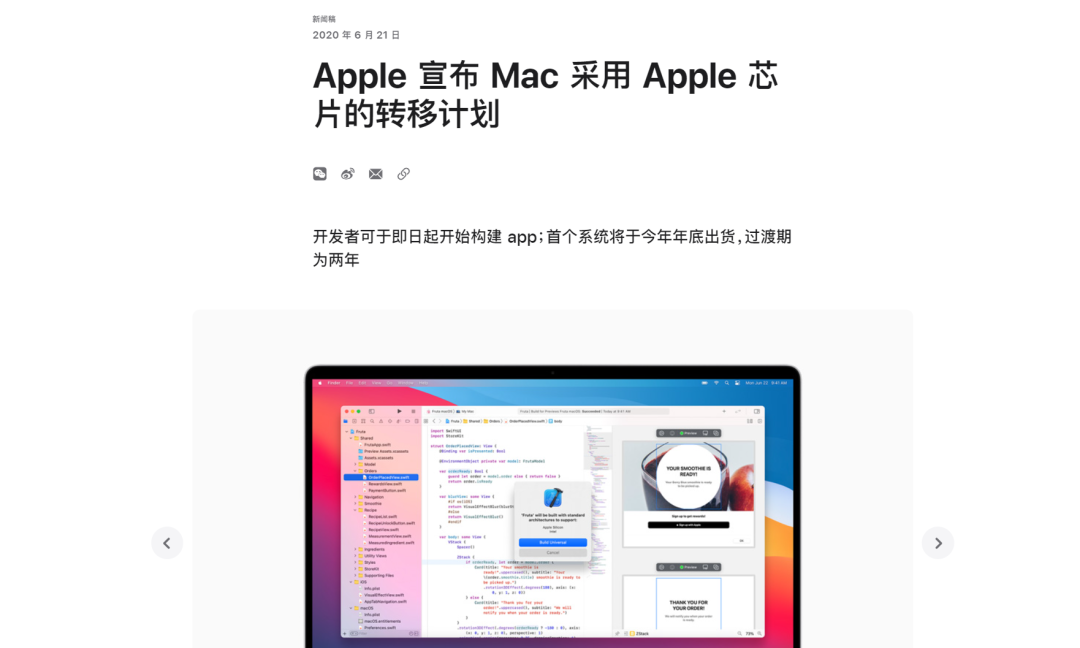
When Apple announced in 2020 that Macs would completely abandon Intel and switch to self-developed chips, many people were worried about Apple - after all, there were many examples of overturning when changing architectures before. As a result, when M1 came out, the energy efficiency ratio directly confused the x86 camp.
The MacBook Air equipped with the M1 chip can compete with many high-end x86 processors in light energy efficiency, and the video playback time can reach 18 hours. The subsequent M2, M3, and M4 will stack buffs all the way, which not only improves the performance and reputation of the Mac, but also feeds the iPad Pro.
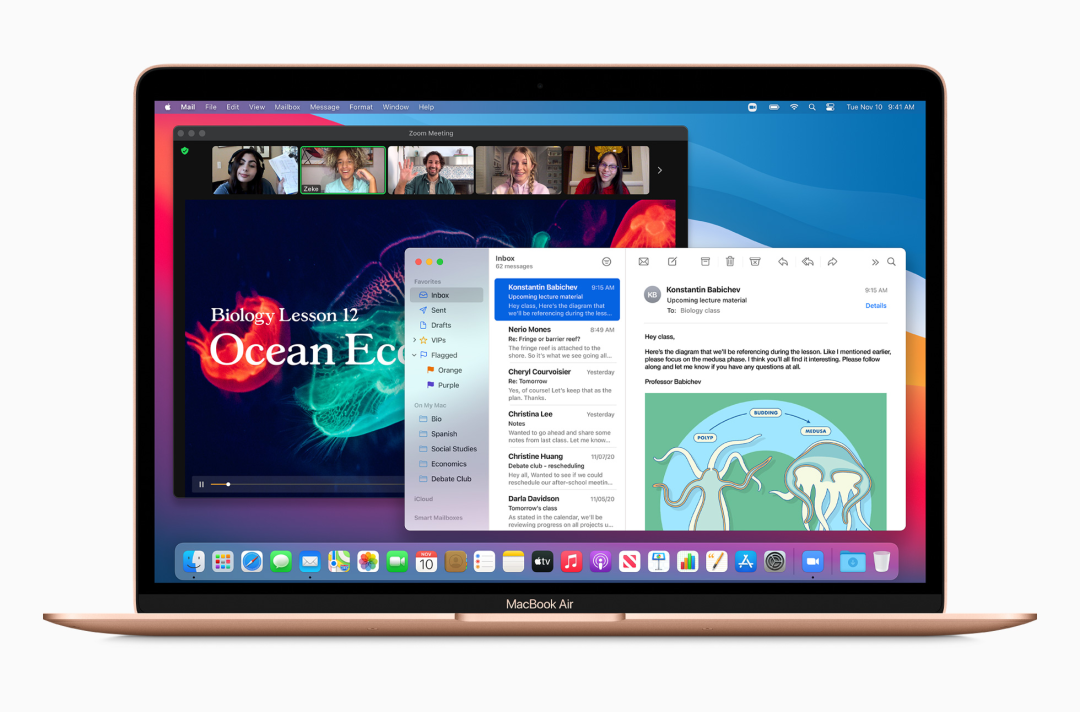
Since then, Apple has held all the chips for the three product lines of iPhone, iPad, and Mac in its own hands - it is completely up to you to decide what you want to upgrade and when you want to upgrade. You no longer have to look at other people's faces or follow other people's plans.
Around these increasingly complete hardware,
Cook has also expanded a business that is often ignored by many people - service.
Before Cook took over, Apple was essentially more of a hardware company. After Cook took office, while growing the existing App Store and iCloud, he also successively launched a bunch of paid subscription businesses such as Apple Music and Apple TV+.
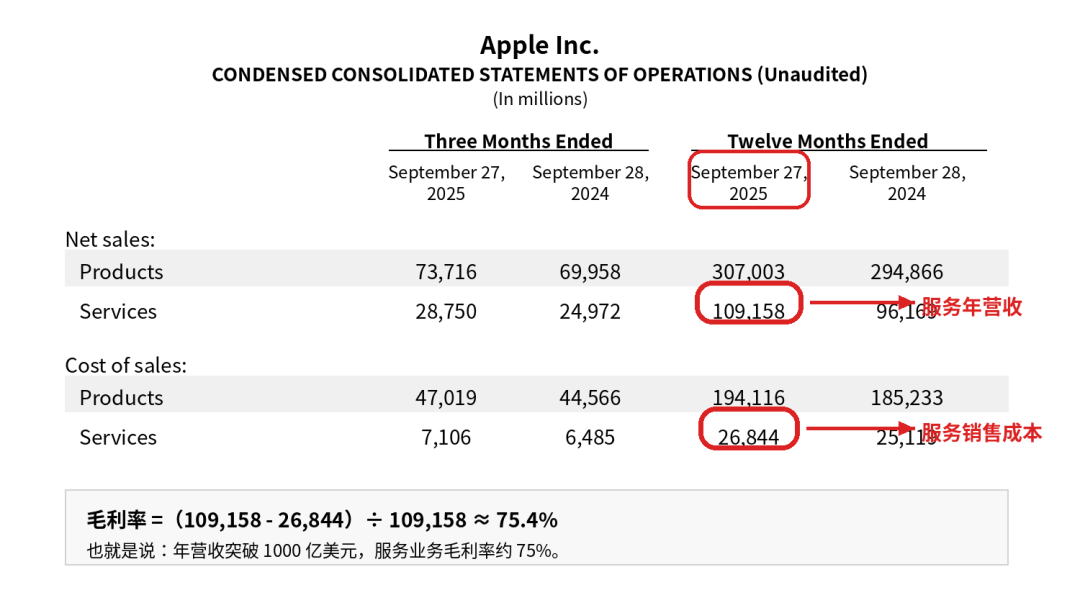
Now Apple's services business has annual revenue exceeding US$100 billion, and its gross profit margin is as high as about 75%.
What is this concept? Take this business alone and see its revenue scale
都
Enough to be among the Fortune 500 companies, and still the most profitable.
This also explains why Apple’s market value can reach 4 trillion yuan - what the capital market loves most has always been this kind of stable, high gross profit, and sustainable growing business. As long as Apple continues to sell products, this is a money printing machine that cannot stop~
Having said that, apart from the previous businesses that have already taken off and blossomed, Cook has certainly not been successful in anything he has done in the past 15 years - the most typical one is Apple building cars.
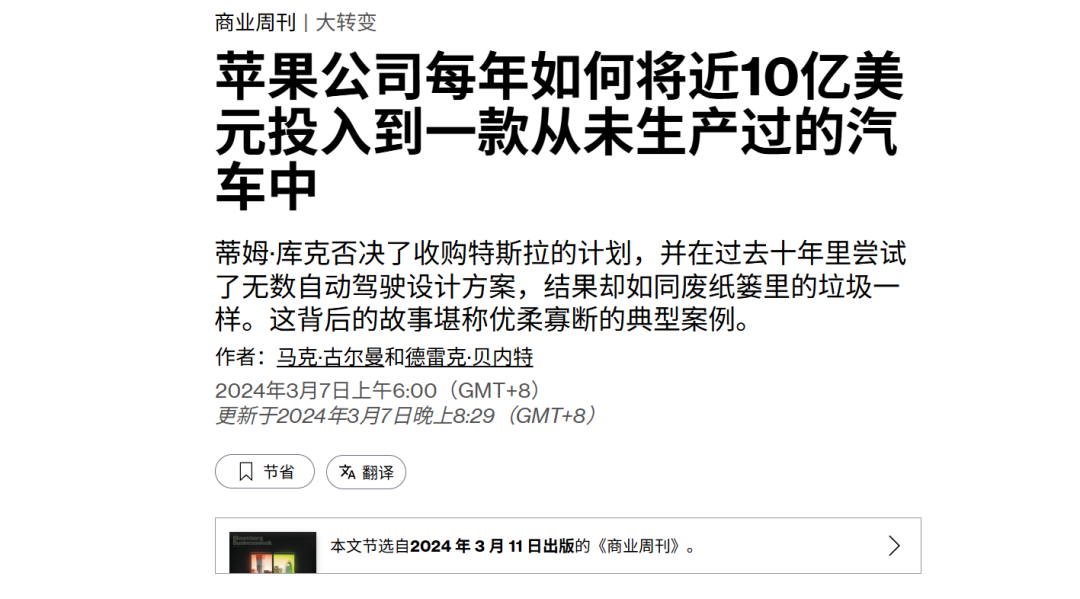
According to reports, Cook secretly launched this project as early as 2014, hoping to replicate the success of the iPhone and redefine cars. At its peak, the team expanded to more than 2,000 people, poaching a bunch of engineers from Tesla and Detroit, and the cumulative R&D investment is estimated to exceed 10 billion US dollars.
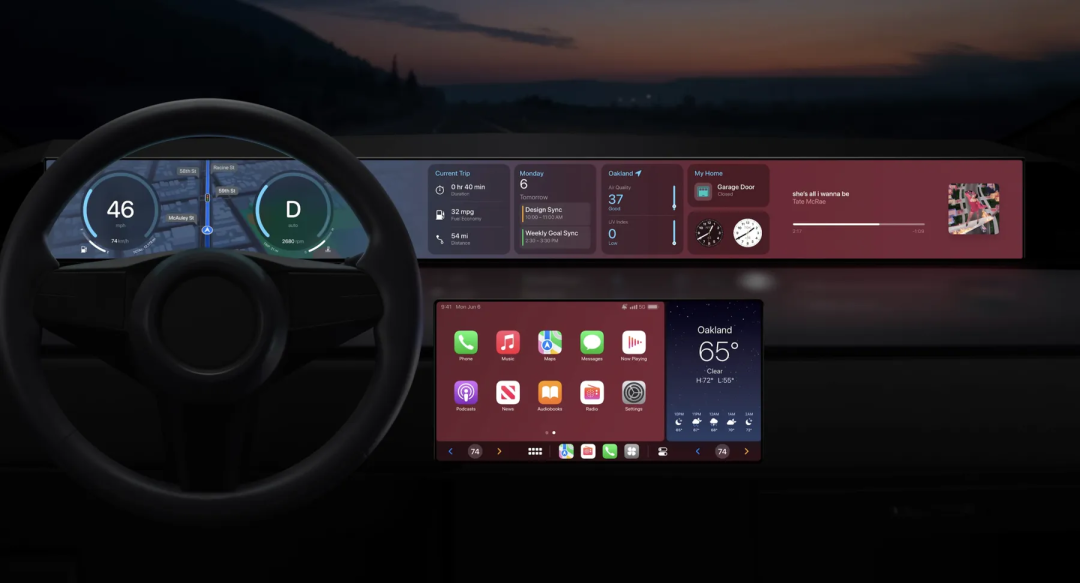
From the initial rumors of building a fully autonomous car, to later lowering the target and adjusting the direction, there have been many iterations along the way for Apple to build a car.
People close to Apple’s supply chain also told Tony that Apple had already confirmed Chery as a partner at that time, and the latter even developed a few prototype cars. The cars were already built, but the step of mass production was never achieved...
The entire project was cut in 2024, and some teams turned to AI. For a company with hundreds of billions of liquid assets and ridiculously strong supply chain capabilities, it still chose to give up after ten years of tossing. This is still somewhat inconsistent with Apple's past image of doing things one by one.
XR has really been made - in 2024, the Vision Pro, which Apple has been waiting for many years, will be officially launched. The software and hardware such as eye tracking, gesture interaction, and Micro-OLED screen have indeed improved the experience of head-mounted display devices by a large margin, far surpassing products of the same period.
However, the price of US$3,499 and the heavy body have directly discouraged many potential users. Apple calls it a "spatial computing device". The ambition is obviously not as simple as selling a head-mounted display device, but to occupy the position of the next computing platform in advance.
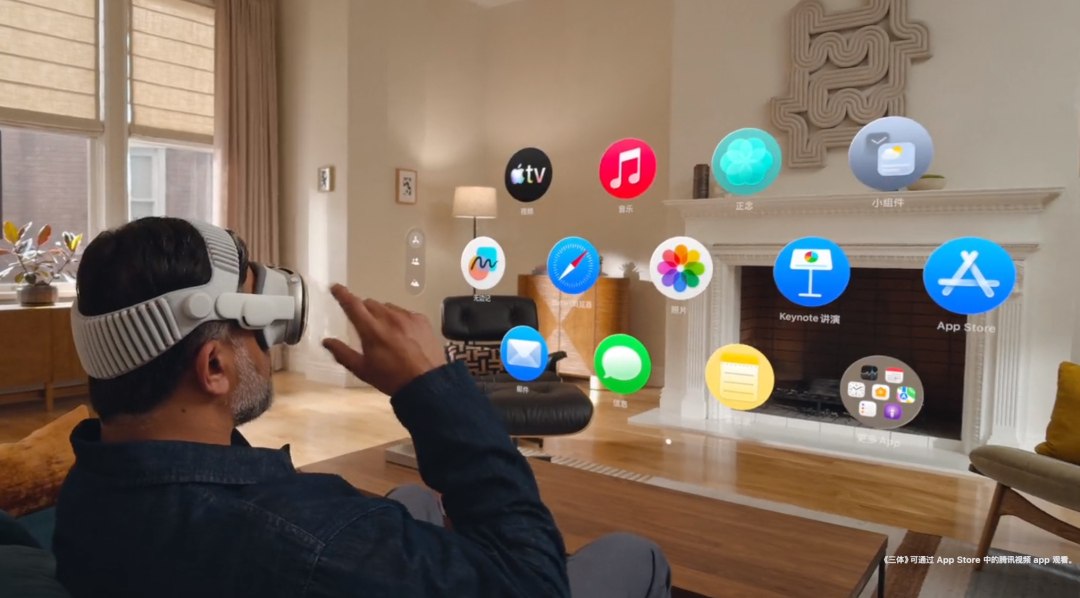
Just two years later, Vision Pro sales can only be said to be average - less than 400,000 units will be shipped in 2024, which is a long way from Apple's expected sales of one million. Everyone recognizes the technology, but there are still not that many people who are really willing to use it every day.
What has been more uncomfortable for Apple than XR in recent years is AI - this may be one of the few tracks in the Cook era where Apple is chasing after others.
After ChatGPT ignited generative AI at the end of 2022, Microsoft, Google, and Meta rushed all the way, and domestic manufacturers were eager to stuff AI into every corner of the system. However, Apple did not launch Apple Intelligence until WWDC in 2024.
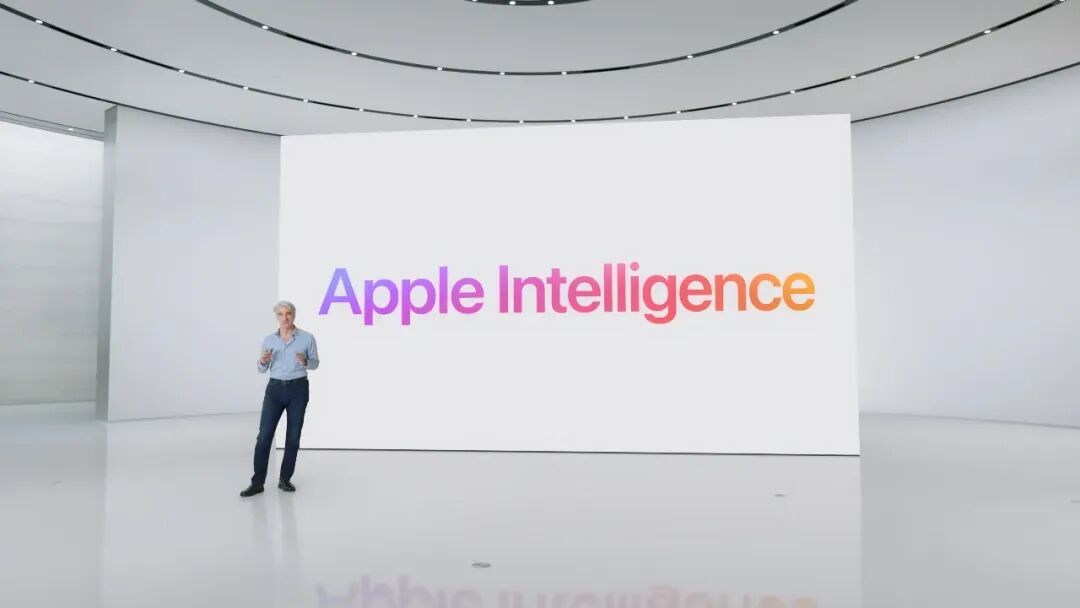
And after it is released, the function it promotes is still a "futures", and you have to wait batch by batch.
The first batch of features to be launched in October 2024 will mainly be text retouching, notification summarization, and photo elimination. As for the most eye-catching part of the press conference - the new Siri that can understand personal information, understand the screen, and can do things across applications, it has not yet been implemented.
In March last year, Apple also added special information on the product page to inform users that the development of these Siri features would take longer than expected and had to be continued.
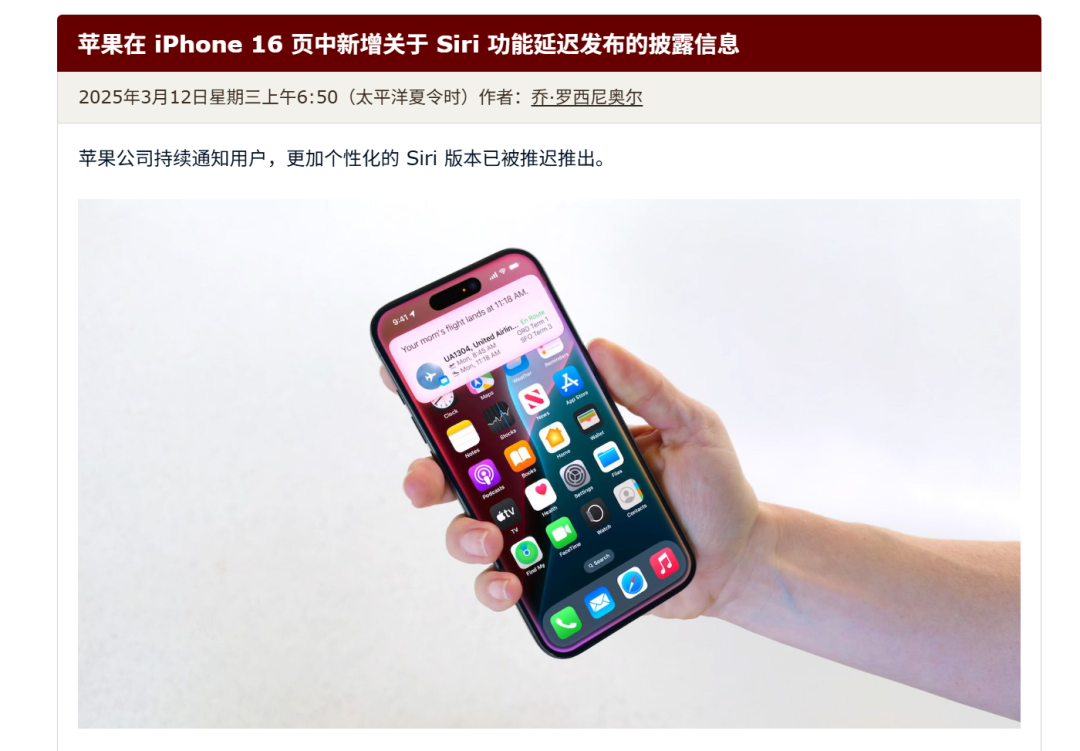
It was not until June this year that Apple re-launched the new Siri AI. Features such as personal context, screen perception, and cross-application operations finally reappeared. It is currently open to developers for testing, and the beta version for ordinary users will have to wait until later.
In other words, Apple is not without AI. The NPU on its chip has been doing machine learning for a long time, and device-side computing and privacy protection have always been its strengths. But in this wave of AI, it does give people a clear feeling for the first time - Apple is slow to respond.
In fact, whether it is the failure of car manufacturing, the tepid success of XR, or
AI
The slow pace of the film makes people feel more and more that Apple is no longer the Apple that led the industry in the first place
, so almost every year at the press conference, netizens inevitably complained: squeezing out toothpaste again.In the eyes of many people, Cook has made Apple "vulgar". The Apple that once shouted Think Different, wanted to change the world, and redefined a category at every turn, in his hands, has become more and more like a step-by-step, precision-operated money-making machine.
In the past, Apple was a sure industry benchmark. Multi-touch, App Store, Touch ID fingerprint recognition, 3D Touch pressure-sensitive interaction, Face ID facial recognition...everything was a trend started by Apple, and Android manufacturers couldn't copy it.
But later on, this feeling seemed to fade a lot. Did Apple really have no innovation or technology? Not to mention the interaction of Smart Island and the ecological synergy of software and hardware, just a self-developed M series chip is an industry earthquake, but for Apple fans, it may indeed lack the sense of subversion.
Many people always like to compare Cook with Jobs, saying that he does not understand product innovation as well as Jobs. But the problem is that a genius like Jobs who single-handedly redefined the industry is a special case. You cannot ask every leader to achieve a miracle from 0 to 1.
The greatness of Jobs lies in creating epoch-making products such as Mac, iPhone, iPad, and iPod, making Apple synonymous with technology and innovation. And Cook's success lies in building the family fortune left by Jobs into a huge business empire.
He may not have created so many new categories that have disrupted the world, but he has made Apple's supply chain more stable, its ecosystem stronger, its profitability stronger, and its risk resistance higher. It has transformed Apple from a company that relies on hit products to a three-wheel drive giant of hardware, services, and ecosystem.
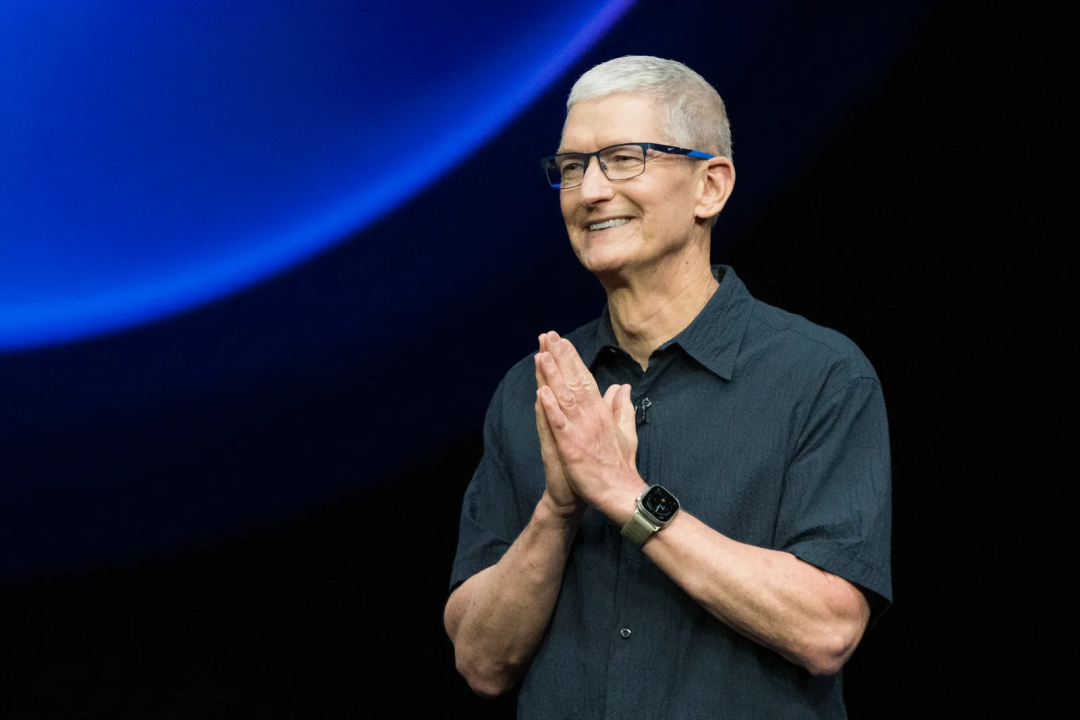
It can even be said that if Cook had not taken over, Apple may not have reached the position it is today. After all, no matter how amazing the product is, no matter how rich the family fortune is, there will be a day when the dividends are exhausted, and a mature business system is the foundation for a company to survive.
Of course, Cook has no real plans to retire. After stepping down as CEO, he will become Apple's executive chairman and continue to participate in some important matters of the company. One of them is to help Apple maintain and strengthen global relations and deal with policymakers around the world.
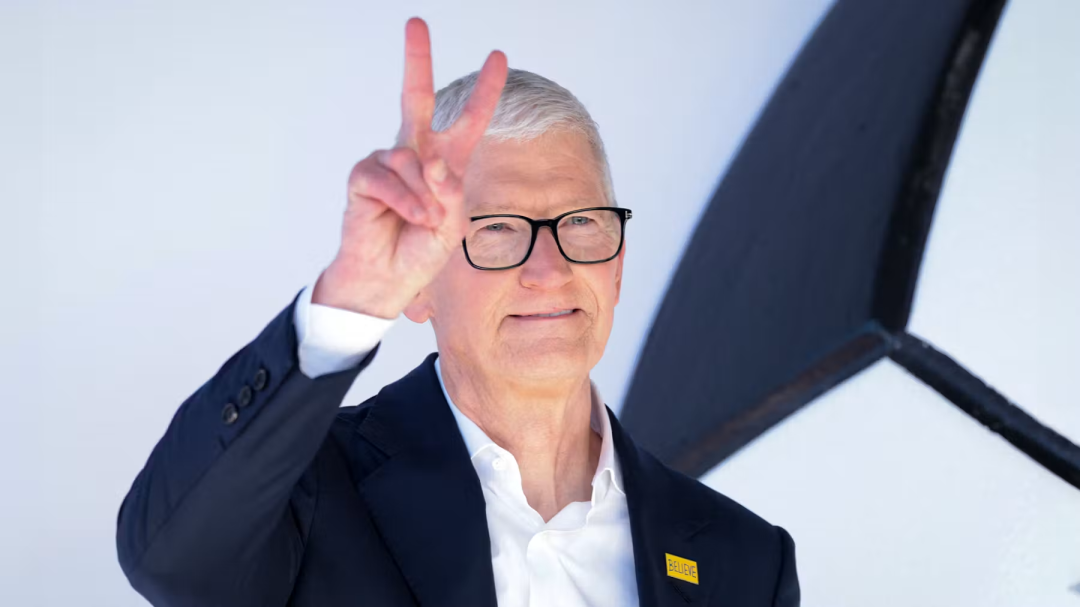
Should it be said, this job is really suitable for him. After all, the troubles faced by technology giants today are not limited to products - any change in antitrust, tariffs, supply chains, and geopolitics may affect Apple's business of tens or even tens of billions of dollars.
This kind of thing allows an "old Jianghu" who has been in the global political and business circles for more than ten years and is familiar with people from all walks of life to continue to sit in charge. He is more or less a professional counterpart... and the 65-year-old Cook himself has said that he plans to hold this position for a long time.
So in the next few years, we will probably see him in the news from time to time.
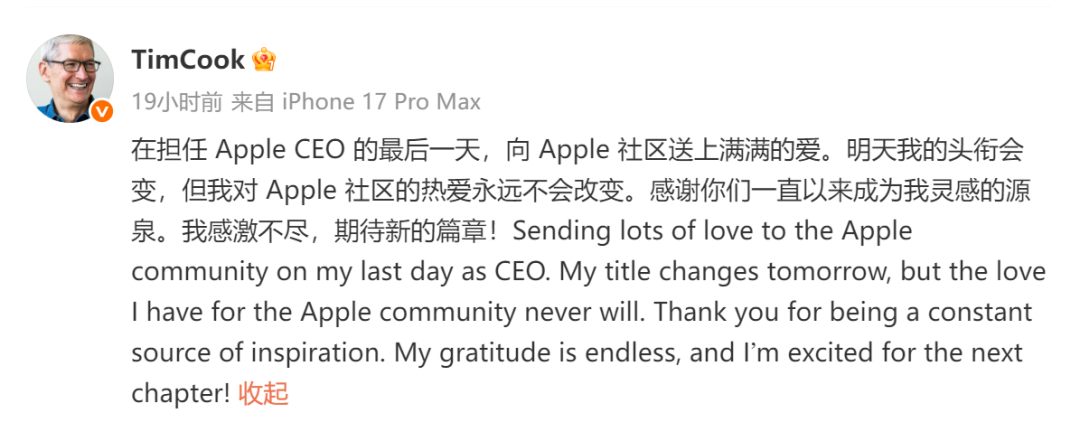
Fifteen years ago, Jobs handed Apple to Cook. Cook proved that he did not need to be the second Jobs to take Apple to an unprecedented height. Today, 15 years later, Cook handed over the 50-year-old company to Ternus.
Just as everyone was questioning whether Cook could succeed Steve Jobs, now the whole world is also curious:
Can Ternus stabilize this US$4 trillion super market? Can Apple survive into the next era without Cook at the helm?
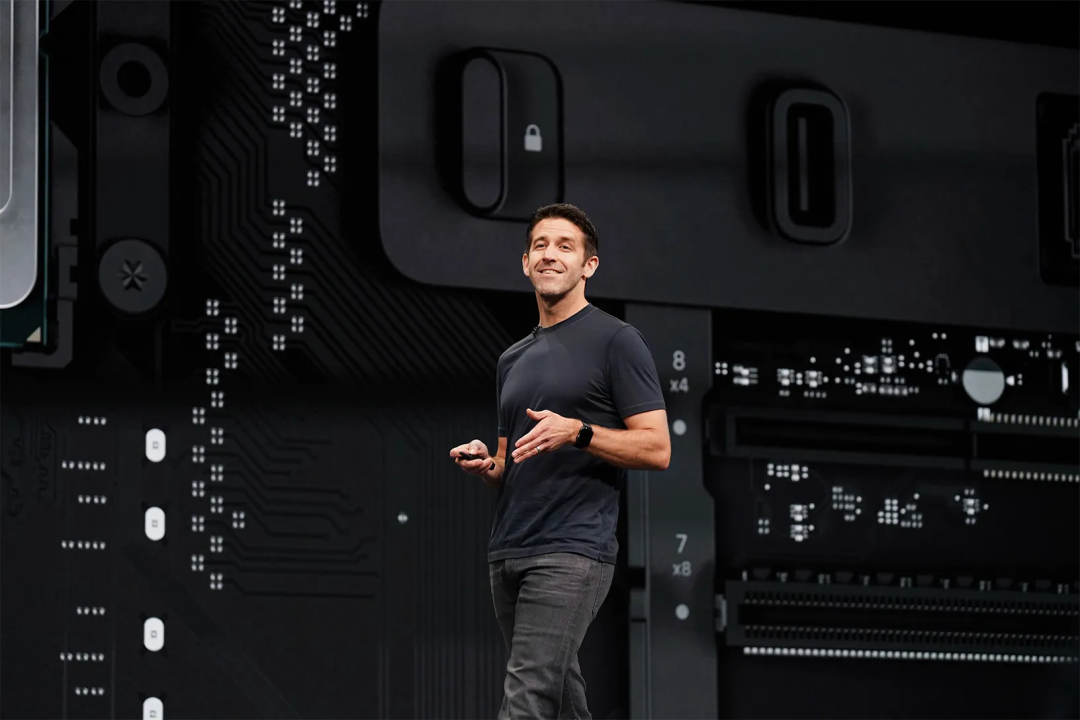
Fortunately, we don’t have to wait too long - Apple’s autumn conference on September 10th, Beijing time, is here in the blink of an eye. The folding screen iPhone, which has been rumored for several years, will most likely be officially launched. This will be the first show of the new CEO after taking office, and it will also be Apple’s long-lost major product update.
We might as well take a look at that time to see if the new official’s first fire after taking office is burning brightly or not~
Comments