China's most-watched TV show, the annual CCTV Spring Festival Gala, on Monday showcased China's cutting-edge industrial policies and efforts to dominate the future of humanoid robots and manufacturing, Reuters reported. Four emerging humanoid robotics startups - Unitree Robotics, Galbot, Noetix and MagicLab - showcased their products at the gala, the TV equivalent of the Super Bowl in the United States.
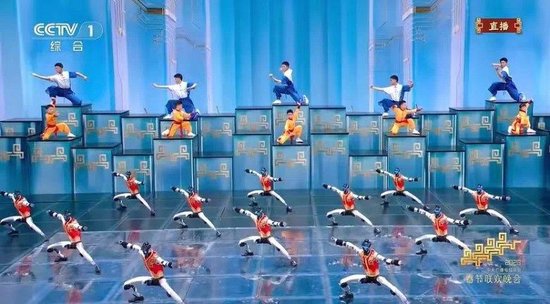
The show's first three sketches all featured humanoid robots, including a martial arts routine in which a dozen Yushu humanoids wielding swords, clubs and nunchucks performed complex fight scenes at close range from human child performers. The fight scene includes a technically difficult fight, which imitates the shaking movements and backward falls of the Chinese "Drunken Master" martial arts style, demonstrating innovations in multi-robot coordination and fault recovery - the robot can stand up again after falling.
China's humanoid robot industry is booming as major manufacturers including Galaxy General Motors and Yushu prepare for initial public offerings this year and domestic artificial intelligence startups release a series of cutting-edge models during the lucrative nine-day Spring Festival holiday. At last year's event, 16 life-size Yushu humanoid robots wowed the audience as they waved handkerchiefs and danced alongside human performers.
The Associated Press paid attention to a rehearsal by the robot and said that robots in China are also preparing to celebrate the Lunar New Year. The report focused on how Yushu Robot combines traditional lion dance, martial arts and AI algorithms, calling it China's new "technology business card."
India Today Global called it "crazy" and marveled at the high stability of the robot during the live broadcast, saying it was an absolutely crazy scene...the robot stunned 1.4 billion viewers.
TechNode reported that at the 2026 China Central Television Spring Festival Gala, a number of robotics companies demonstrated their latest research and development results. Humanoid robots participated in multiple performances and interactive sessions and became a major technological highlight of this Spring Festival Gala.
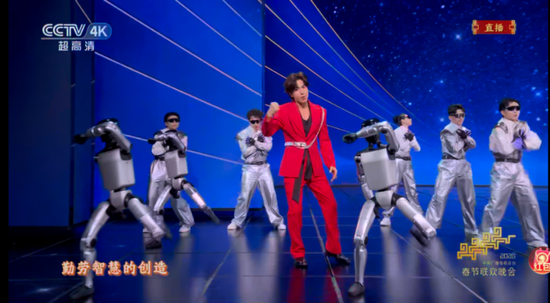
MagicLab was the first robotics company to appear on stage and demonstrated two humanoid robots in the show. MagicBot Gen1 is capable of basic interactive actions such as waving, while MagicBot Z1 demonstrates a 360-degree spin action called "Thomas 360." The company said this is the first time a humanoid robot of the same size has completed such a difficult continuous rotation.
Yushu Robot made its third appearance at the Spring Festival Gala. In the martial arts-themed show "WuBOT," its G1 and H2 humanoid robots shared the stage with martial arts actors, demonstrating moves including horse steps, somersaults, nunchaku routines and drunken fist elements. Wang Xingxing, founder of Yushu Technology, said that this year’s technical focus is to enable robots to complete formation changes and motion conversions while running at high speeds. This work involves highly dynamic motion control and multi-robot collaborative algorithms. These technologies are expected to be applied to collaborative robot operations in complex environments in the future.
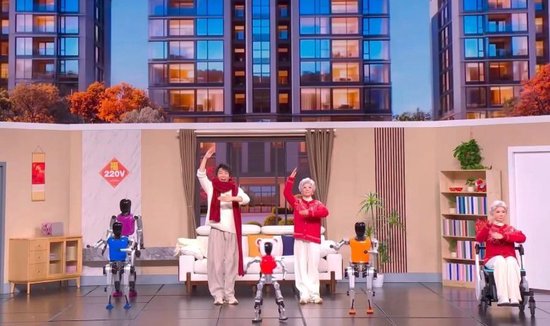
In the comedy sketch "Grandma's Favorite," Noetix Robotics showcased several humanoid robots, including Bumi, N2, E1, and a bionic humanoid customized specifically for the show. These robots completed stunts such as side flips and back flips on a stage of only 12 square meters, fully demonstrating their motion planning and precise landing capabilities in a small space.
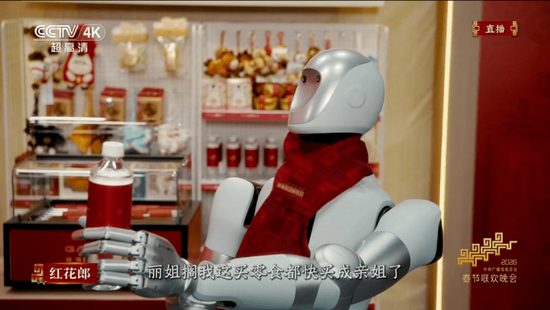
Beijing's Galbot robot appeared in the holiday short film "My Most Unforgettable Night", demonstrating skills such as voice interaction, folding clothes, and picking up items, and interacted with actors. The demonstration highlighted the robot's ability to sense its surroundings, make quick decisions and perform tasks accurately.
According to reports, humanoid robots have appeared on high-profile stages, highlighting China’s progress in fields such as motion control, balance algorithms and human-computer interaction. Public demonstrations in real-life scenarios also provide useful indicators for measuring the maturity of the technology. As humanoid robots continue to improve their mobility and coordination in complex environments, their applications are gradually expanding from laboratory testing to commercial demonstrations and service scenarios. However, large-scale deployment still depends on further improvements in cost control, reliability and long-term operational stability.