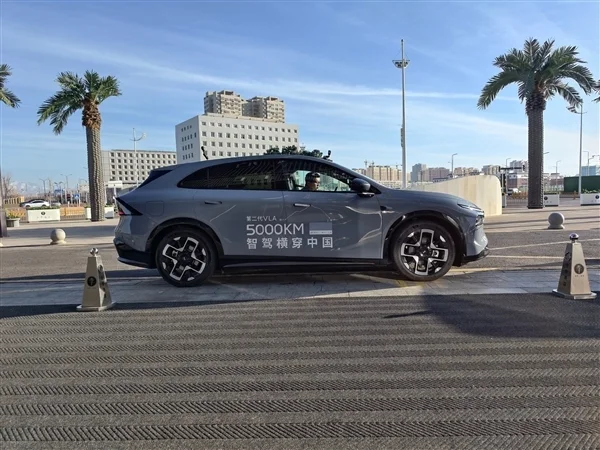
Last night, Xpeng Motors held a press conference. He Xiaopeng, chairman and CEO of Xpeng Motors, and Liu Xianming, head of Xpeng Motors' General Intelligence Center, attended the conference. The two exchanged and shared information on the technical capabilities, push rhythm, and medium- and long-term plans of the second-generation VLA. When asked about the smart driving gap between China and the United States, He Xiaopeng said,Autonomous driving is a comprehensive contest between software and hardware, engineering capabilities and scale capabilities. Currently, China and the United States are both in the first echelon, but China’s roads are “ten times more difficult” than those in the United States. Only by overcoming complex road conditions can the second-generation VLA truly achieve globalization..
"I think China and the United States are both the first camps in smart driving, and each has its own merits. Waymo and Tesla have been engaged in smart driving for a long time, but there are so many players in this field, and everyone has not yet solved L4 and L5. Because the implementation of smart driving is a comprehensive competition of software, hardware, systems, and engineering capabilities." He Xiaopeng said.
He then went on to say: “I think Xpeng's second-generation VLA is more suitable for globalization, because China not only has highways and urban roads, but also rural roads outside third- and fourth-tier cities, and you may even encounter cattle, sheep, and chickens while driving. Xpeng is one of the best companies in China. I believe that together with other Chinese friends, we will surpass the United States and go global."
Liu Xianming said that China and the United States are in the same echelon of smart driving, and we are the fastest progressing and best developing in the world.
“China has many difficult driving scenarios, such as more electric vehicles and pedestrians.We believe that solving a problem first solves the most difficult part. At this time, it will be much easier to generalize to other scenarios.China is the most difficult, but it also gives us greater opportunities. In the most complex test sites, there are no problems with methodology, and we will basically go to the front. "
He also said that the biggest change he has seen in the past two years is the density of AI talents in China and the United States. China has many outstanding AI talents, and the government also attaches great importance to the development of AI, so we are confident in the development of smart driving in China.