
Abstract:
A new study from the University of California, Santa Barbara found that a sand flea-like crustacean with a body about the size of a fingernail is changing the landscape of California beaches with astonishing efficiency. Studies have shown that these small creatures living on coastal beaches can move up to 50 kilograms of sand per meter of coastline every day, and their long-term cumulative sand removal can even be equivalent to the total amount of sediment transported by some rivers in Southern California.
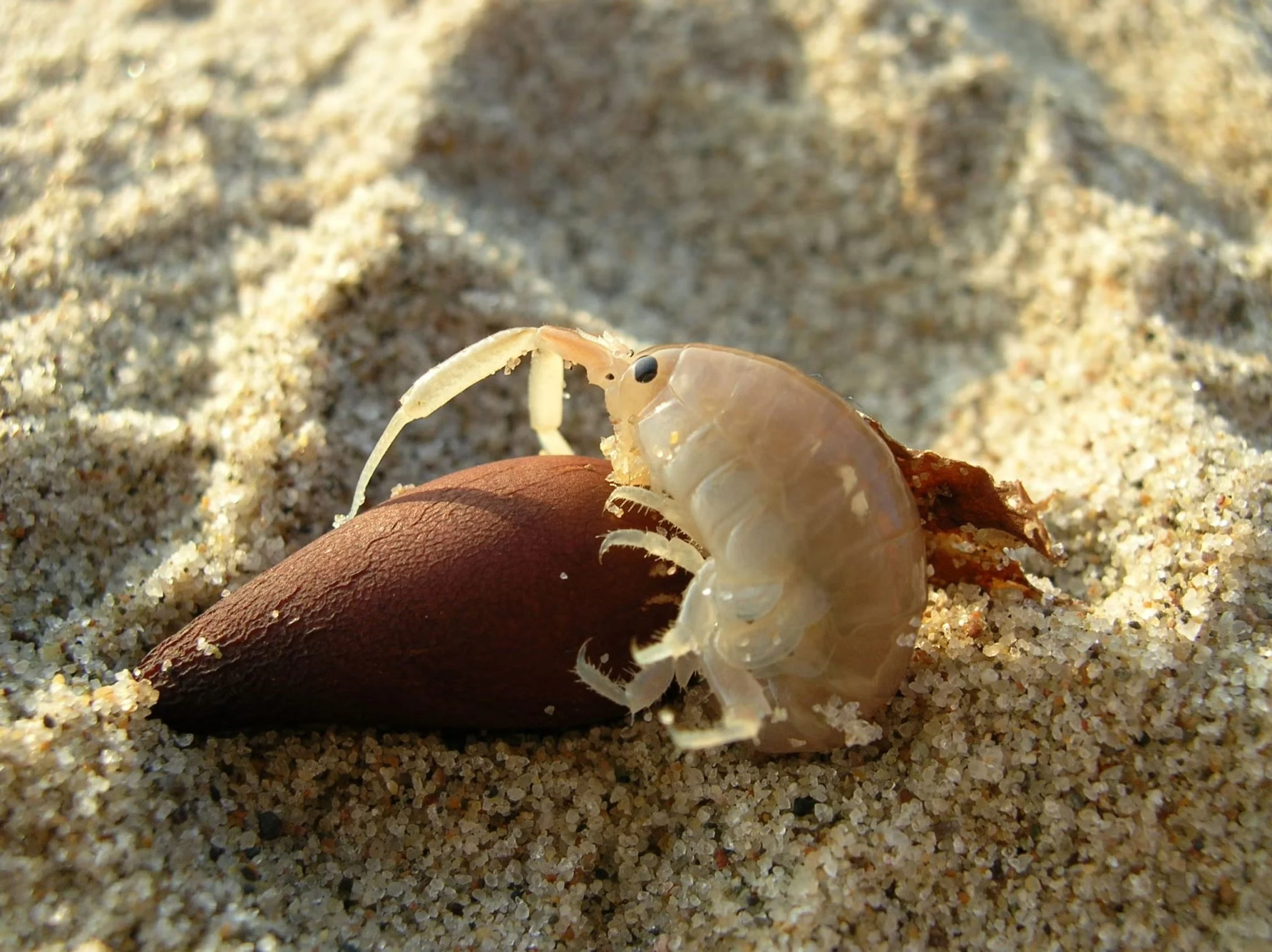
Relevant research was published in the Journal of Geophysical Research: Surface. The research object is Megalorchestia spp., a species that lives widely on the California coast. These shrimp-like amphipod crustaceans mainly feed on seaweed washed ashore by waves. They usually hide under sand or seaweed piles during the day and come out at night to dig new caves.
The research team discovered that these seemingly inconspicuous little creatures actually have a powerful ability to disturb sediments. Researchers have calculated that in some beach areas, they can dig out and transport about 50 kilograms of sand per meter of coastline every day, equivalent to about 110 pounds. If this data is extended to a longer coastline, the overall transport volume is comparable to the scale of sediment transported by some of Southern California's major rivers and the amount of sand transported by coastal ocean currents.
These creatures may have one of the highest known rates of bioturbation on Earth, said David Hubbard, a marine scientist at the University of California, Santa Barbara. Bioturbation refers to the process in which organisms stir up, mix and redistribute sediments through their activities.
The research team pointed out that people generally believe that beach landforms are mainly shaped by waves, ocean currents, tides and wind. In fact, beaches are just one component of a larger sediment circulation system. Sediments from rivers, streams, coastal cliffs and dunes are continuously transported to the coast, where they are then re-transported by waves and currents. The scientific community has long paid attention to these physical processes, but the impact of animals living in the sand layer on coastal evolution has long been underestimated.
The research originally grew out of the interests of physical geographer Tim Baxter. While traveling from the UK to do postdoctoral research at the University of California, Santa Barbara, he noticed the abundance of sandhoppers on local beaches and began thinking about just how much sand these creatures could dig up and what they meant for coastal sedimentary systems.
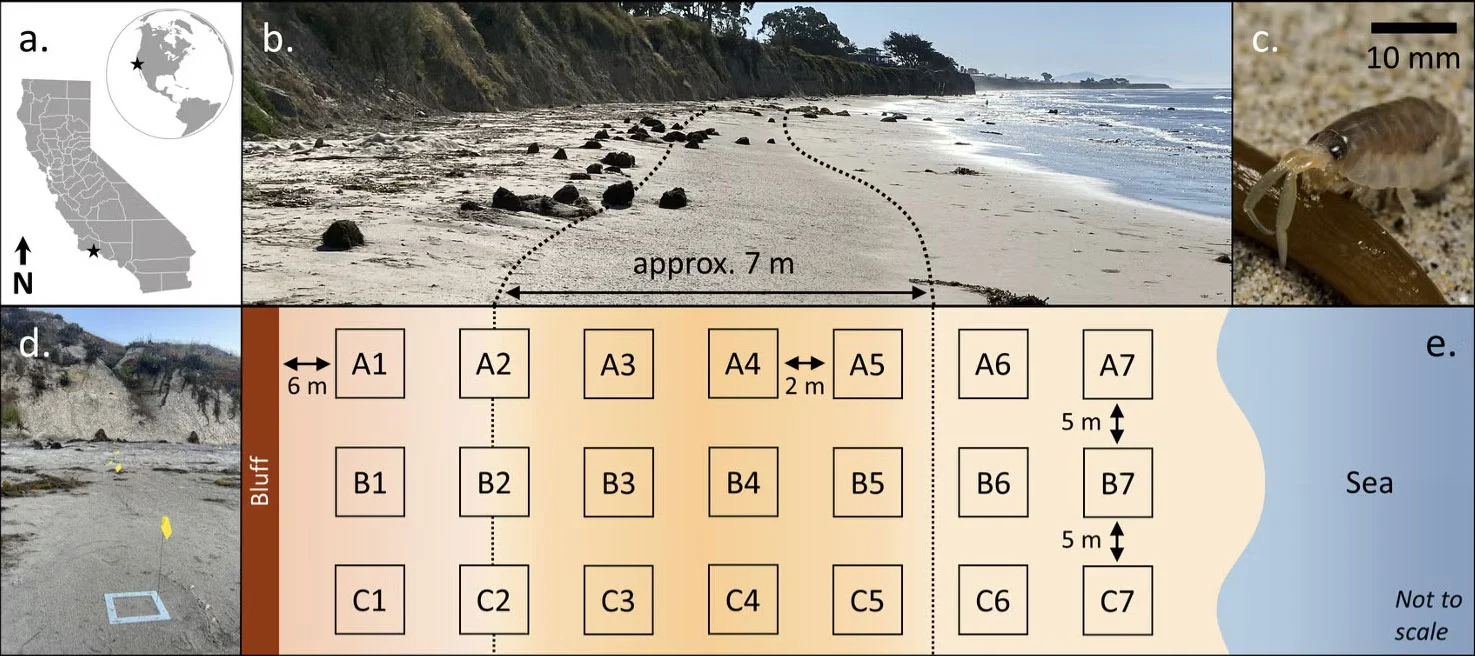
To obtain accurate data, the research team conducted field experiments at Isla Vista Beach near Santa Barbara. After the high tide, the researchers set up 21 observation plots in areas where sand jumping shrimp are most active, and embedded metal frames into the sand. After waiting overnight, they returned to the site to collect the piles of sand created by the animals' excavations, dry them and weigh them for analysis.
The results shocked the research team. The metal frames in some experimental areas were even completely buried by the reaccumulated sand. Sampling data showed that there were an average of about 26 sand jumping shrimp in each plot, and the total number per meter of coastline was about 21,450. In just one night, the animals can move an average of about 38 kilograms of dry sand, with the most active areas carrying up to 50 kilograms.
Further analysis showed that the amount of sand transported by each sand jumping shrimp each time it dug a new burrow was more than 10 times its own weight. Unlike many burrowing animals that use fixed burrows for long periods of time, sandhopper shrimps abandon old burrows and dig new roosts almost daily, thus continuously turning over and redistributing beach sediments.
These animals usually live in sandy areas that are moist but not permanently submerged by seawater. Researchers call this area the "golden zone" on the beach. The sand here has just the right amount of moisture to prevent it from collapsing from being too wet, nor is it as loose as dry sand at high altitudes, making it perfect for them to build temporary burrows.
Based on eight years of monitoring data, the research team estimates that sand jumping shrimp activities along about 25 kilometers of Southern California coastline alone can transport more than 310 tons of sand every day. This number far exceeds previous understanding of the ecological role of these small crustaceans.
The findings suggest the role of animal behavior in coastal sediment recycling may be severely underestimated, the researchers said. In the future, scientists may need to take these tiny but highly effective "beach engineers" into consideration in addition to traditional wave and current factors when assessing coastal erosion, beach stability, and coastal ecosystem management.
Comments