
Abstract:
Researchers at North Carolina State University in the United States have developed a new type of soft underwater robot whose shape and movement are inspired by the marine creature crested crinoid. Unlike many underwater robots that require multiple motors and complex control systems to achieve three-dimensional motion, this device uses only two pneumatic drive inputs to complete actions such as rising, falling, moving forward and backward, hovering, and rotating around its own axis.
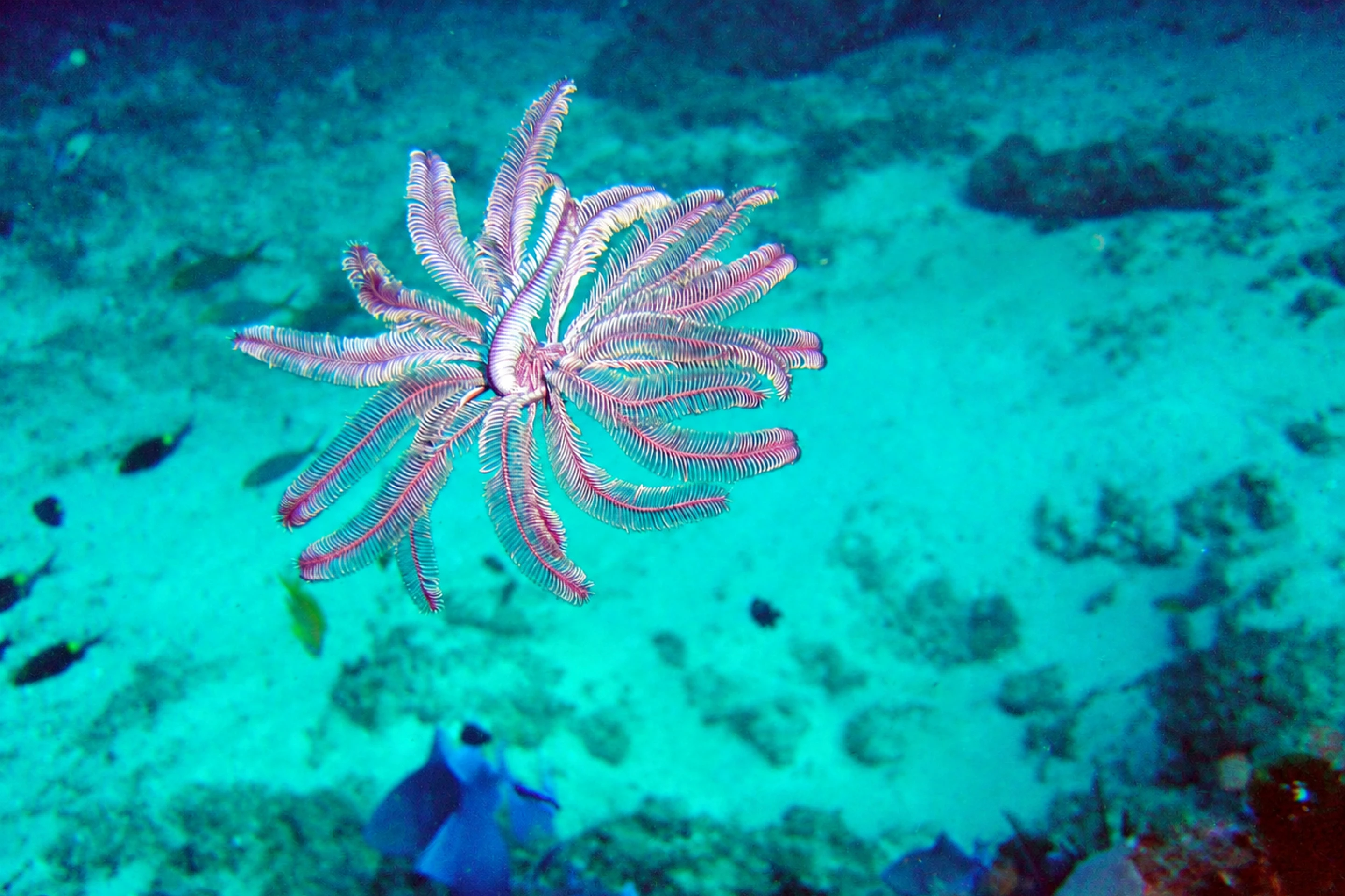
The core of this research is not just to imitate the appearance of marine creatures, but to try to apply the mechanical principles contained in biological movements to robot design. Crest crinoids are crinoid echinoderms with multiple soft, feathery arms that can change direction or maintain position in the water by coordinating the movements of different arms. The research team hopes to use similar structural designs to solve the limitations of traditional underwater robots in three-dimensional maneuverability.
A few years ago, the same research team developed an underwater robot inspired by manta rays. The device can swim quickly, but has shortcomings in moving up and down, turning in place, and adjusting posture in complex spaces. The researchers therefore turned to studying crinoids, hoping to give robots more flexible locomotion capabilities without significantly increasing mechanical complexity.
The new robot consists of a central body and four flexible wing-like structures. The central part integrates two independent aerodynamic drive channels, and the four elastic wing limbs are responsible for interacting with the water to generate propulsion and rotational torque. By changing the way the two drive channels work, the robot can switch between three different movement modes.
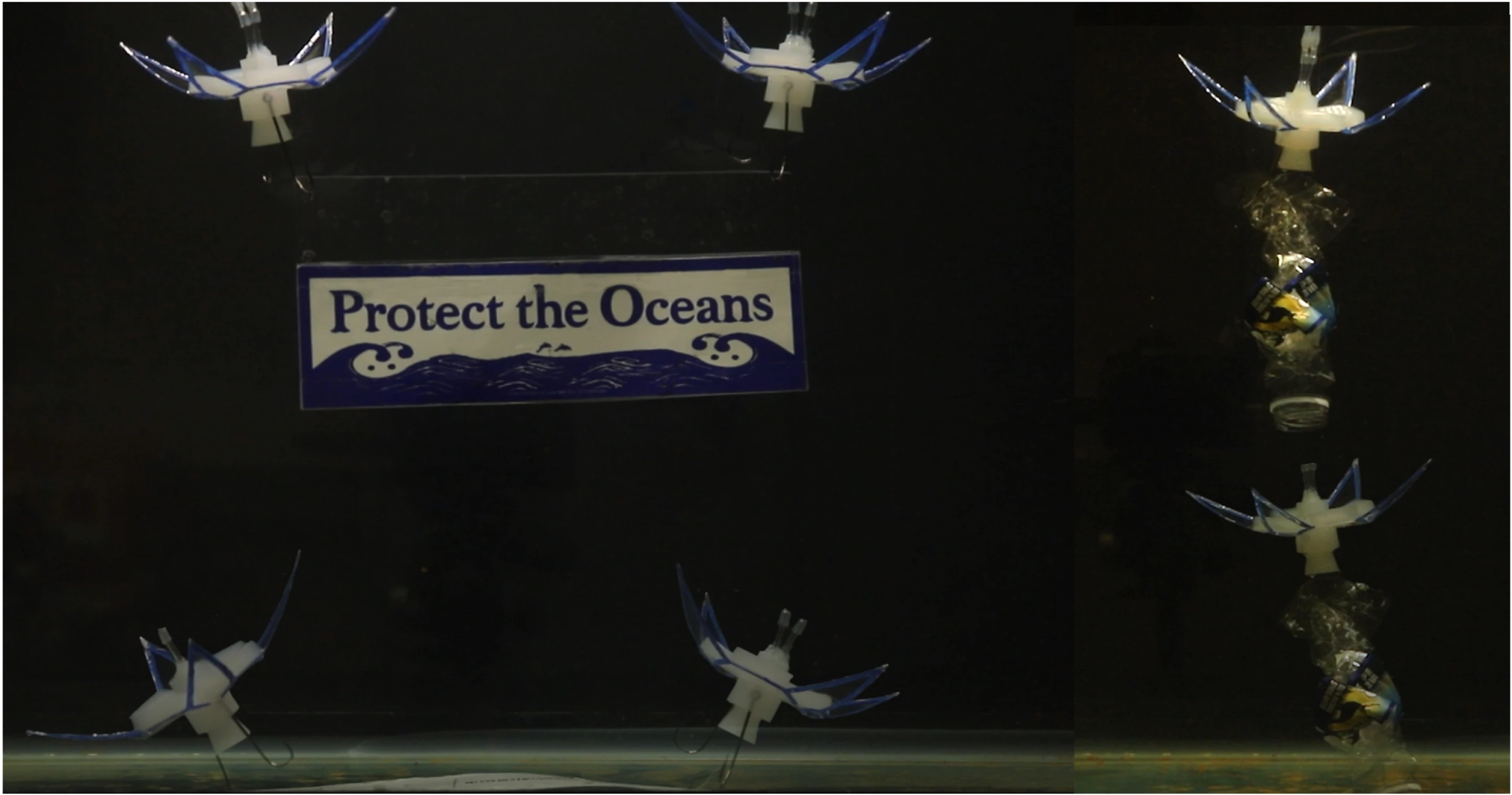
The first mode is called "jellyfish mode" by researchers. When the two actuators work at the same time, the robot's four wing limbs will quickly bend downward, pushing the water flow and moving itself upward. After the drive stops, the wing limbs return to their original shape by virtue of their own elasticity, and the robot changes its motion state and moves downward. By adjusting the action frequency, the robot can continue to rise and fall, or it can slow down its movement and maintain a near-hovering state in the water.
The second mode is "fish mode". At this time, the researchers only activated one of the drive channels, causing the structures on both sides of the robot to move asymmetrically. The swing of one wing limb is similar to the way a fish uses its tail fin to propel the robot forward or backward. By controlling the drive input, the propulsion action can also be changed to adapt the robot to different directions of movement.
The third mode is "rotor mode". The researchers alternately control the two drive channels to make the wing limbs produce different movements in sequence, thereby driving the robot to rotate around its own axis. This ability allows the robot to adjust its orientation in the water, providing the basis for subsequent three-dimensional navigation and orientation operations.
These three modes combined enable the robot to move in directions such as up and down, forward and backward, and rotation. The team noted that typically to achieve a similar range of motion, traditional designs might require at least six actuators, whereas this robot only requires two. The key lies in a design concept called "mechanical intelligence."
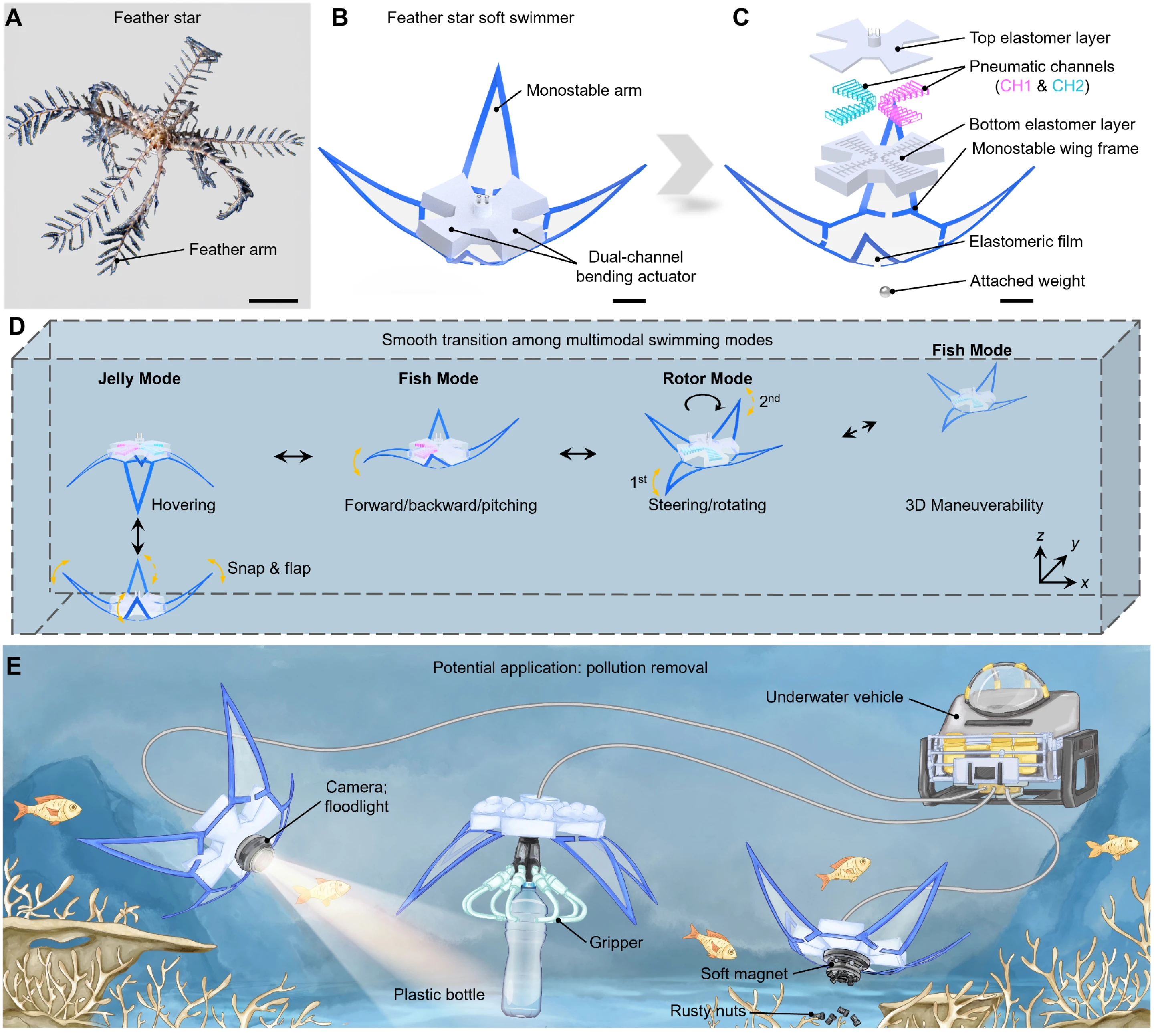
The so-called mechanical intelligence refers to realizing some control functions through the physical characteristics of the structure itself, rather than leaving all actions to independent motors and complex electronic systems. In this robot, the flexible wing limbs can quickly return to their original shape after bending under force. The elastic energy stored and released in the structure helps the robot produce fast and regular movement. Researchers take advantage of this property to convert limited driving input into many different forms of motion.
This design is also closely related to the development direction of soft robots. Traditional underwater robots usually rely on rigid structures, multiple thrusters and complex attitude control systems to complete their movements, while soft robots make more use of the deformation capabilities of flexible materials to interact with the surrounding environment. For equipment that needs to operate in complex underwater environments, reducing the number of mechanical parts is expected to not only simplify the structure, but also reduce the burden on control and maintenance.
In the experiment, the research team also analyzed changes in the surrounding water flow when the robot moved. The researchers used particle image velocimetry technology to observe the movement of water flow, and combined it with computational fluid dynamics simulations to study the vortex structures formed under different movement modes. These analyzes help explain how the robot generates propulsion through wing limb swings and how rotational movements create corresponding torques.
Experimental results show that the robot's maximum swimming speed reaches 1.64 body lengths per second, and its maximum rotation speed is 90 degrees per second. The researchers also reported a minimum value of 17.6 for their transportation cost metric, which measures the energy consumption required for a robot to move. Relevant results show that it is feasible to use simple structures to achieve multi-mode motion, but these experimental data do not mean that it has reached all the performance requirements required for actual ocean operations.
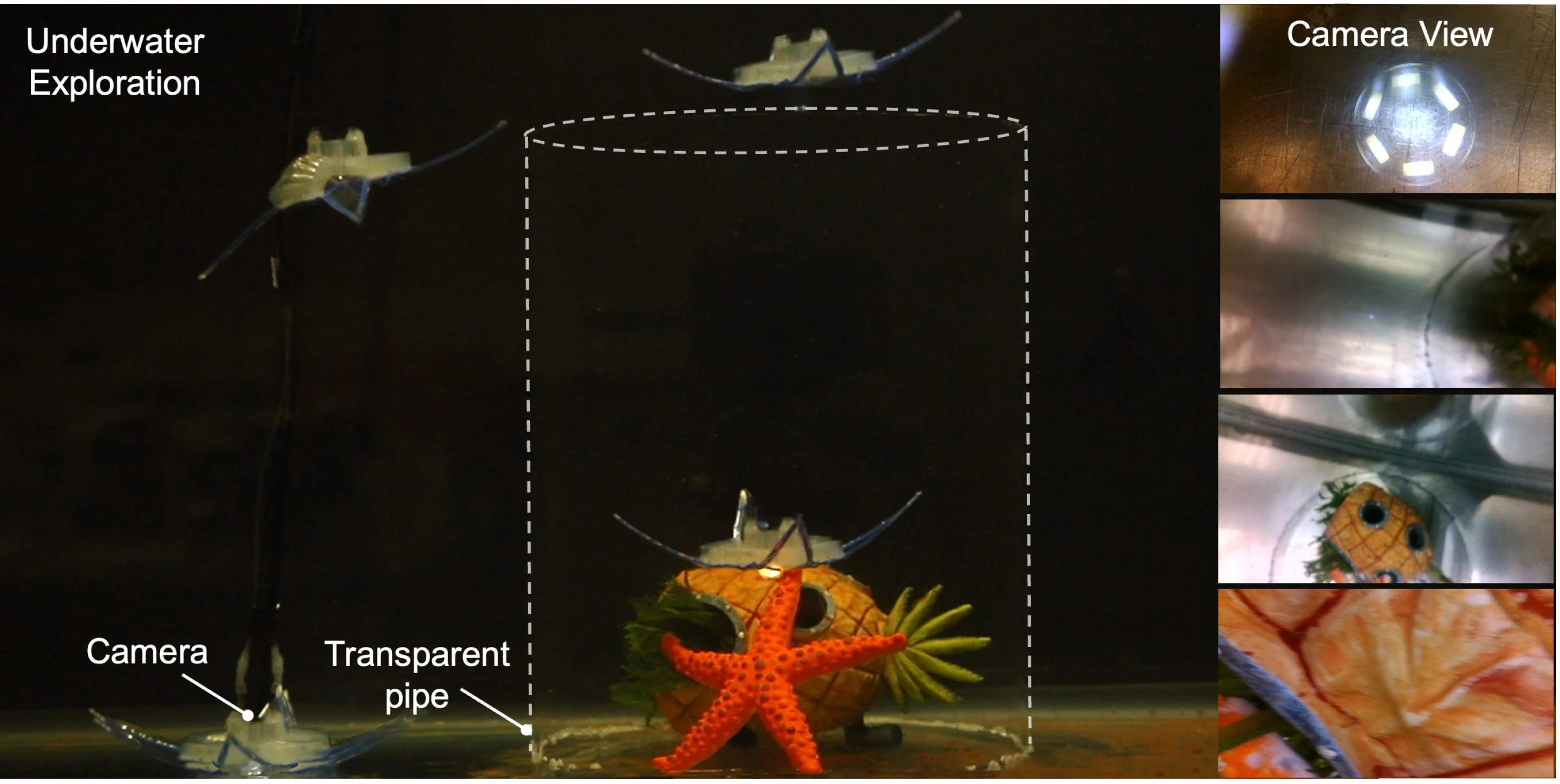
The research team demonstrated some potential uses of the platform, including carrying underwater cameras to explore the environment, carrying or lifting underwater objects, and allowing multiple robots to work together. By adding cameras, grippers or other auxiliary equipment, future robots may be able to be used for tasks such as underwater environmental monitoring, marine pollution surveys and underwater item recovery.
Researchers also envision that multiple robots can perform tasks together. For example, a single robot is responsible for observing and locating objects, while other robots assist in carrying or collecting objects. However, these applications are still potential development directions, and the robot's long-term operation capabilities, endurance time, communication methods and stability in complex water flows in real ocean environments need further verification.
Currently, the robot still relies on pneumatic drive input. The research team said that follow-up work will include developing a fully wireless version and collaborating with researchers in other fields to explore more specific application scenarios. Going wireless will help reduce connectivity constraints between equipment and external control systems, but will also introduce new challenges in power supply, control and underwater communications.
This research result was published in the open access journal "Science Advances", and the paper is titled "Minimally driven soft-bodied swimming robot imitating feather-crested crinoid to achieve multi-mode three-dimensional maneuverability". Research shows that robots do not necessarily need to continuously add motors, sensors and control systems to gain greater maneuverability. By rationally designing flexible structures and making full use of the elasticity and motion characteristics of the material itself, relatively simple mechanical systems can also achieve complex actions.
For the field of underwater robotics, this idea may have broader significance. In the future, researchers may be able to learn from the movement mechanisms of more marine organisms to develop soft robots with simpler structures and more diverse movement methods, so that they can play a role in tasks such as environmental monitoring, underwater exploration, and complex space operations.
Comments