
Abstract:
Since graphene was first successfully isolated in 2004, this two-dimensional material composed of only a single layer of carbon atoms has continued to refresh people's understanding of the quantum world. Now, a theoretical prediction proposed nearly 20 years ago has finally been experimentally verified. For the first time, scientists have directly observed a special quantum effect in graphene that has long existed in theoretical models, providing important evidence for understanding how electrons move in two-dimensional materials.
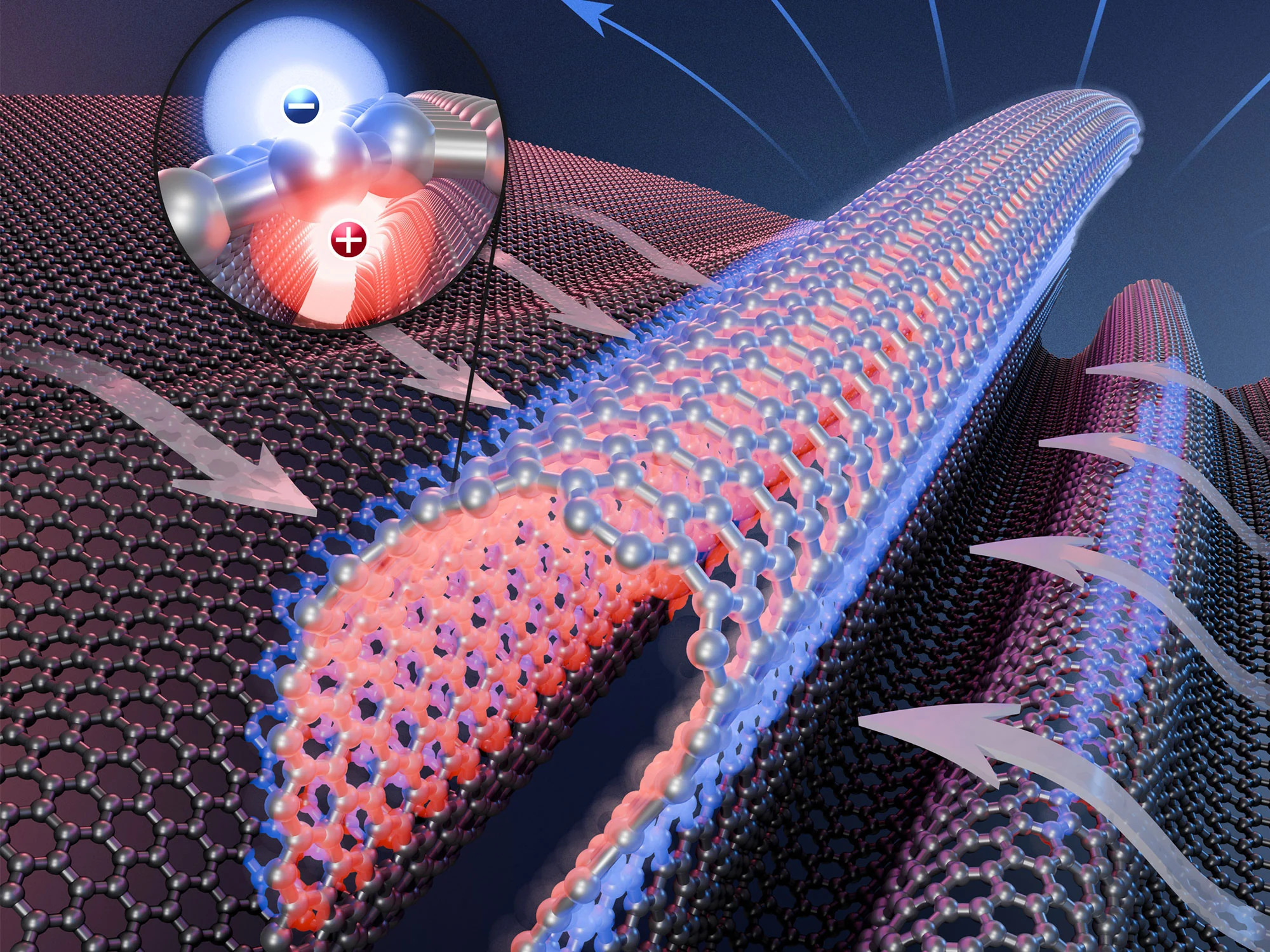
The research team stated that this result reveals that the atomic arrangement of graphene can affect electronic behavior in a way that has been difficult to directly observe before. Although related theories were proposed nearly two decades ago, scientists have never been able to obtain clear evidence due to extremely demanding experimental conditions.
Graphene is composed of carbon atoms arranged in a honeycomb lattice. Graphene has long been viewed as an ideal platform for studying quantum phenomena because electrons in it move extremely fast and behave like massless particles. Over the past few decades, researchers have predicted that this unique lattice structure will produce a series of special electronic effects, some of which have been verified. The phenomenon observed this time is one of the important predictions that has not been confirmed experimentally for a long time.
To detect this effect, the research team prepared extremely high-quality graphene samples and minimized impurities and defects in the material. At the same time, the experiments were conducted in a strictly controlled low-temperature environment to avoid external interference from masking the weak quantum signals.
The measurement results show that the movement of electrons in graphene is not completely described by traditional electrical theory, but is affected by quantum effects produced by the lattice structure. This phenomenon is highly consistent with predictions in theoretical models from nearly two decades ago, providing direct support for related theories.
The researchers pointed out that this discovery not only solves a long-standing fundamental physics problem, but also further proves that graphene is still an important material for exploring quantum physics. Although more than two decades have passed since graphene was invented, scientists are still discovering new physical phenomena from this simple single-atomic layer material.
In addition to its basic scientific significance, this achievement may also affect the development of future quantum electronic devices. The research team believes that an in-depth understanding of electron behavior in graphene will help design higher-performance quantum sensors, ultra-low-power electronic components, and next-generation quantum information technology platforms.
The researchers said this work once again demonstrates that even after more than two decades of extensive research, graphene still contains a large number of physical mysteries that have not yet been fully revealed. As experimental technology continues to advance, scientists are expected to discover more quantum phenomena beyond traditional theoretical expectations in this type of two-dimensional materials in the future, thus promoting the development of quantum technology and new electronic devices.
Comments