
Abstract:
In May 2024, an extremely rare geomagnetic storm swept across the world, and the gorgeous aurora rarely penetrated deep into low latitudes, astonishing countless stargazers. However, this super event known as the "Gannon Storm" or "Mother's Day Storm" not only brought visual spectacles, but its geomagnetic SYM-H index plummeted to -518 nanotesla, becoming the world's second strongest geomagnetic storm since 1981 after the November 2004 storm.
High in the sky where the aurora shines, an abnormal scene is staged inside the Earth's magnetosphere that subverts the traditional understanding of the astronomical community: an international team composed of scientific research institutions such as Nagoya University in Japan recently discovered that although the solar wind that hit the Earth at that time was extremely dense, the vast majority of the core driving ions that dominated this storm of the century did not come from the solar wind in outer space, but from the Earth's own ionosphere.
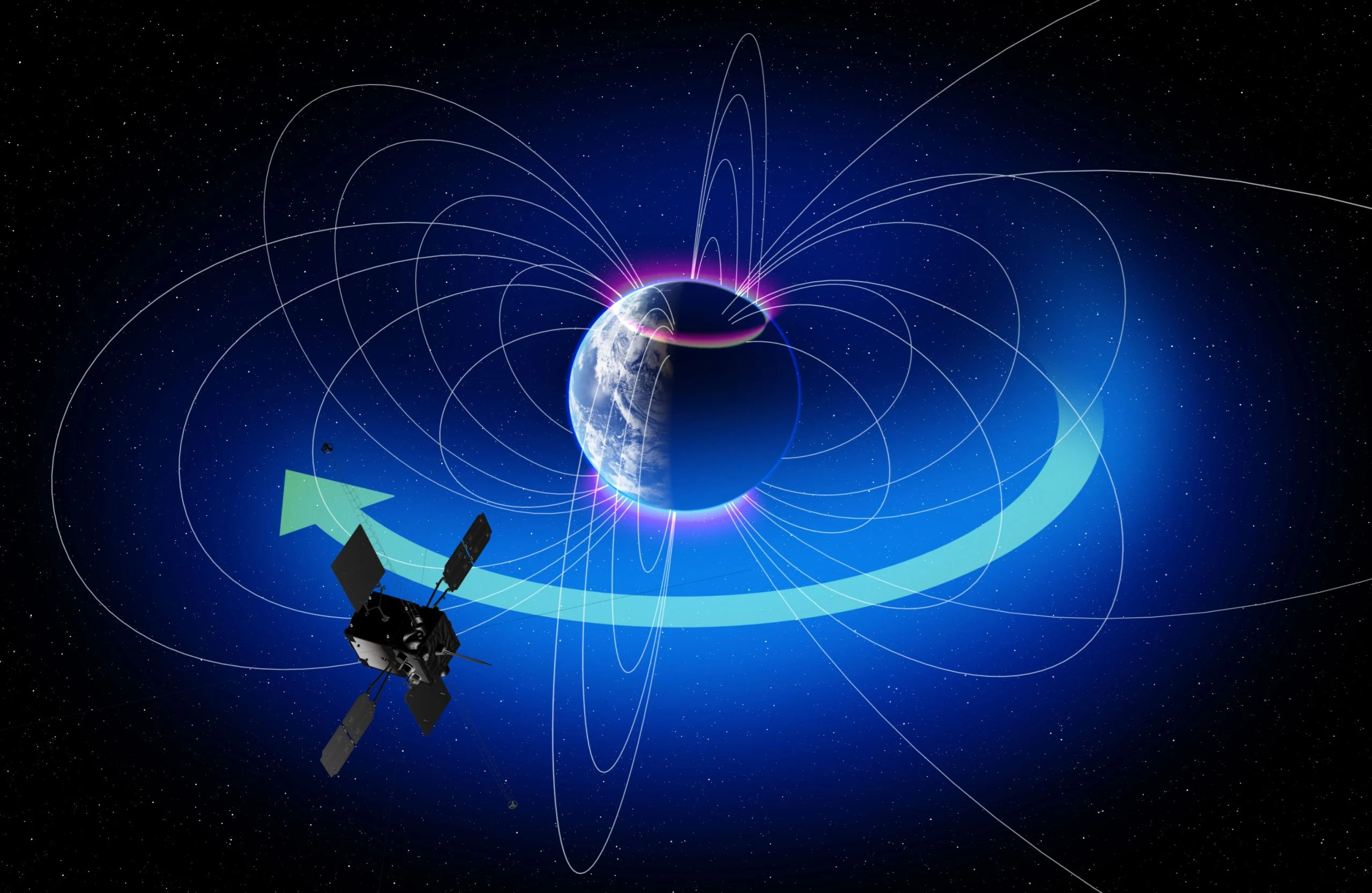
The core magnetic field disturbance of geomagnetic storms is mainly dominated by ring currents. Ring currents refer to high-energy ion currents (mainly hydrogen ions and oxygen ions) that move slowly around the Earth thousands to tens of thousands of kilometers away from the equator. The reverse magnetic field they generate partially offsets the geomagnetic field at the ground. For decades, science has debated how much of the material in the ring current comes from the solar wind and how much comes from Earth's electrically charged upper atmosphere (the ionosphere). According to traditional speculation, since the super storm in May 2024 is caused by the direct bombardment of high-density solar wind formed by the continuous violent explosion of sunspots and the merger of multiple magnetized plasma clouds, solar wind ions should play a decisive role.
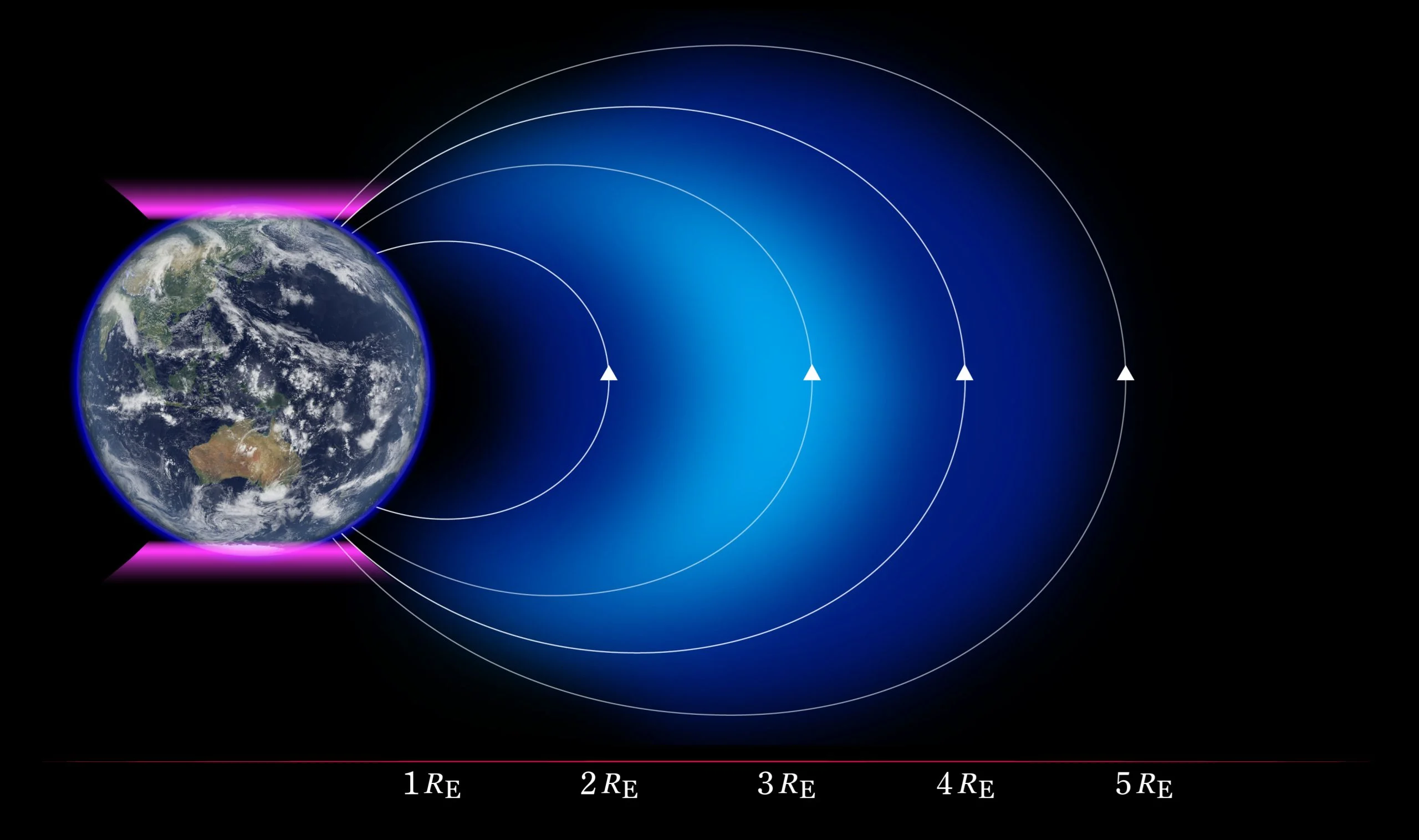
However, the latest direct detection data published in Science Advances completely shattered this assumption. The "Arase/ERG" satellite jointly operated by the Japan Aerospace Exploration Agency (JAXA) and Nagoya University accurately passed through the ring current formation area during the early stage and peak period of the storm. The precision instrument carried by the satellite not only achieved the first simultaneous observation of ring current ions and solar wind in a super geomagnetic storm of the same magnitude, but also recorded an unprecedented material composition ratio - data shows that about 85% of high-energy ions in the ring current are oxygen ions from the earth's ionosphere, and the actual contribution of solar wind ions is minimal.
The oxygen ions released from the ionosphere are much heavier than the light particles brought by the solar wind. The extreme dominance of these heavy ions significantly enhances the magnetic field disturbance. When the storm reached its peak, "Arase" observed a sharp drop in magnetic field strength of up to 40% at the perigee, about 16,000 kilometers away from the Earth. The distance between the core disturbance area and the surface significantly refreshed the near-Earth extreme value of previous similar records. Accompanied by this unprecedented severe magnetic field distortion, high-energy electrons in this region also simultaneously experienced a sharp drop and escape.
This disruptive measurement result not only answers the mystery of basic physics, but also has far-reaching application value in the real world. Super geomagnetic storms can directly pose radiation risks to orbiting spacecraft, interfere with GPS navigation and radio communications, and even damage ground power grids and cause large-scale power outages. Existing space weather forecast models have long relied too much on solar wind parameters. New findings show that the state of the Earth's upper atmosphere itself also determines the upper limit of the destructive power of mega-geomagnetic storms. This research result also provides strong scientific support for Japan's new generation dual-satellite mission "FACTORS" that is under preparation. This mission will specifically explore how the earth's atmospheric ions escape to the magnetosphere and "add fuel to the fire" of geomagnetic storms. In the future, it is expected to greatly improve the accuracy of extreme space weather warnings.
Comments