
Abstract:
The physics community has made a breakthrough in the field of research on extreme states of matter. The scientific research team has successfully measured the microscopic properties of an extraordinary quantum material that cannot be contained in any traditional container for the first time with high precision - superfluid helium. This experimental result not only overcomes the measurement problems that have plagued the physics community for decades, but also opens up new ways to deeply explore quantum fluid mechanics and the evolution of matter in extreme environments.
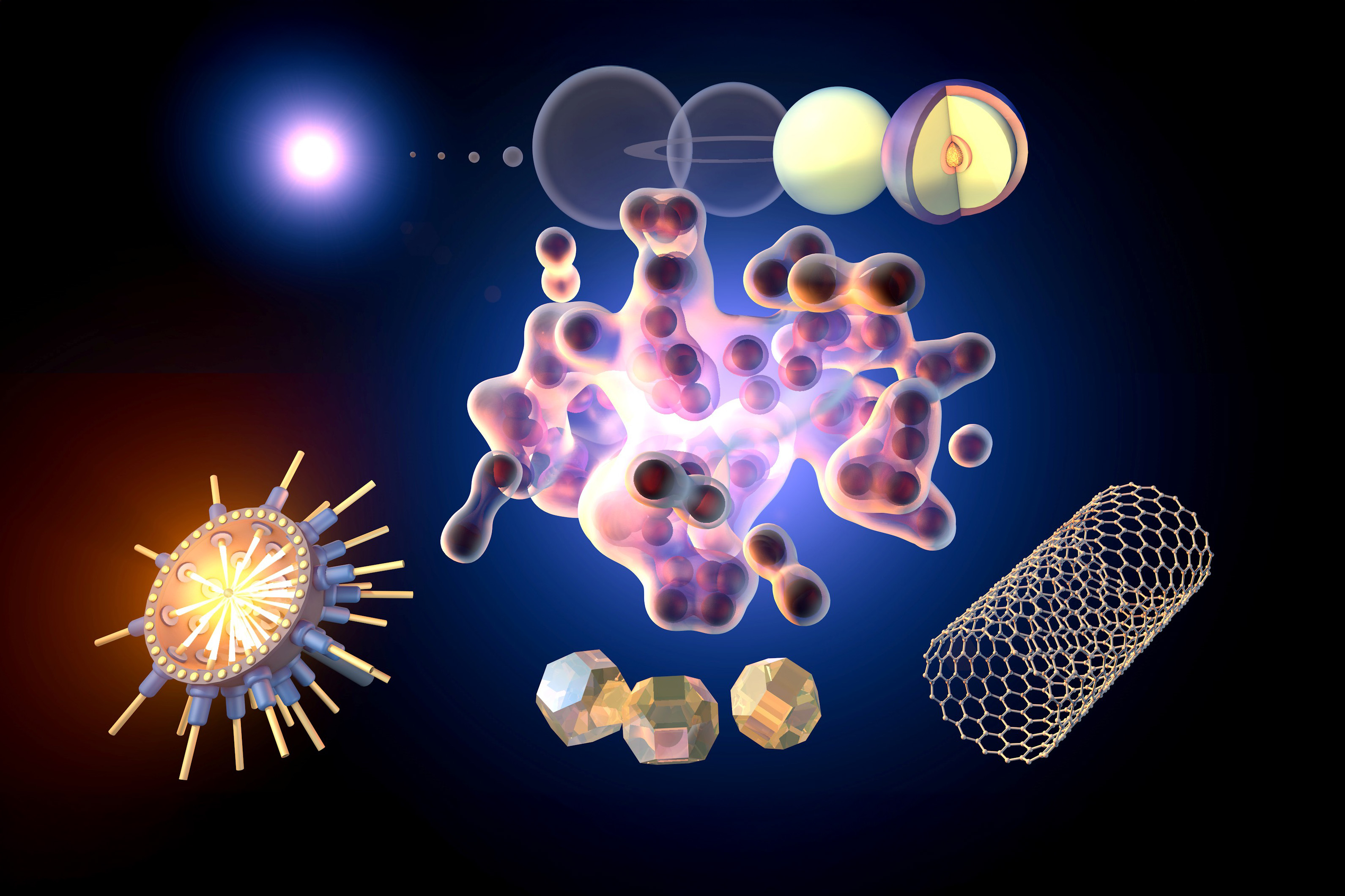
When liquid helium is cooled to a critical transition point close to absolute zero (minus 273.15 degrees Celsius), a quantum phase transition occurs into a superfluid state. Substances in a superfluid state completely lose their viscosity and do not generate any frictional resistance when flowing. This extreme frictionless property gives superfluids the amazing wall-climbing ability: they can form an extremely thin microscopic film along the wall of a beaker or test chamber containing it and climb up, and flow out over the edge of the container, so physically no conventional container can completely seal and restrain it. For a long time, this spontaneous climbing and inability to be statically accommodated have made it extremely difficult for researchers to stably measure its thermodynamics and microscopic quantum dynamics parameters without interference from boundary effects.
In order to break through this experimental limitation, physicists designed an innovative suspension and non-contact detection solution. The experimental team used superconducting magnetic levitation technology and a precision optical tweezers system to suspend trace amounts of superfluid helium droplets in space in an ultra-high vacuum and extremely low temperature environment, completely breaking away from any contact with the surface of a solid container. Subsequently, the researchers used extremely weak laser probes and ultra-sensitive superconducting resonance sensors to conduct unprecedented ultra-high-precision real-time monitoring of the quantum vortex motion, microscopic sound wave propagation speed and quasi-particle excitation energy inside the suspended droplets.
The experimental results provide for the first time the purely physical parameters of a superfluid without interaction on the container surface, confirming many cutting-edge predictions about unimpeded flow and macroscopic quantum coherence in quantum many-body theory. The research team pointed out that this measurement is not only decisive for the improvement of basic physical theory, but the microscopic flow mechanism it reveals will also provide key data support for the next generation of ultra-sensitive quantum gyroscopes, the cooling architecture of superconducting quantum computing devices, and the simulation of superfluid nuclear matter inside neutron stars in astrophysics.
Comments