
Abstract:
The latest research from scientific researchers shows that repeated practice alone is not enough to ensure the mastery of a new skill. The newly practiced movements need to be stabilized through the memory consolidation process after training.
A scientific research team from the field of hypernetwork brain physiology at Tohoku University in Japan recently discovered in mouse experiments that stimulating the vagus nerve after training can allow experimental animals to show stronger motor learning effects in the next few days. The results reveal that communication between internal organs and the brain may play a key role in shaping long-term learning abilities.
As an important pathway connecting the body and the brain, the vagus nerve is responsible for transmitting visceral sensory information to the brain and issuing brain instructions to regulate physiological functions such as heart rate and digestion. Clinically, vagus nerve stimulation is often used to treat some neurological diseases. Most previous studies have focused on how this therapy regulates the neurotransmitter system, but this latest study has discovered another pathway through which the body affects the brain.
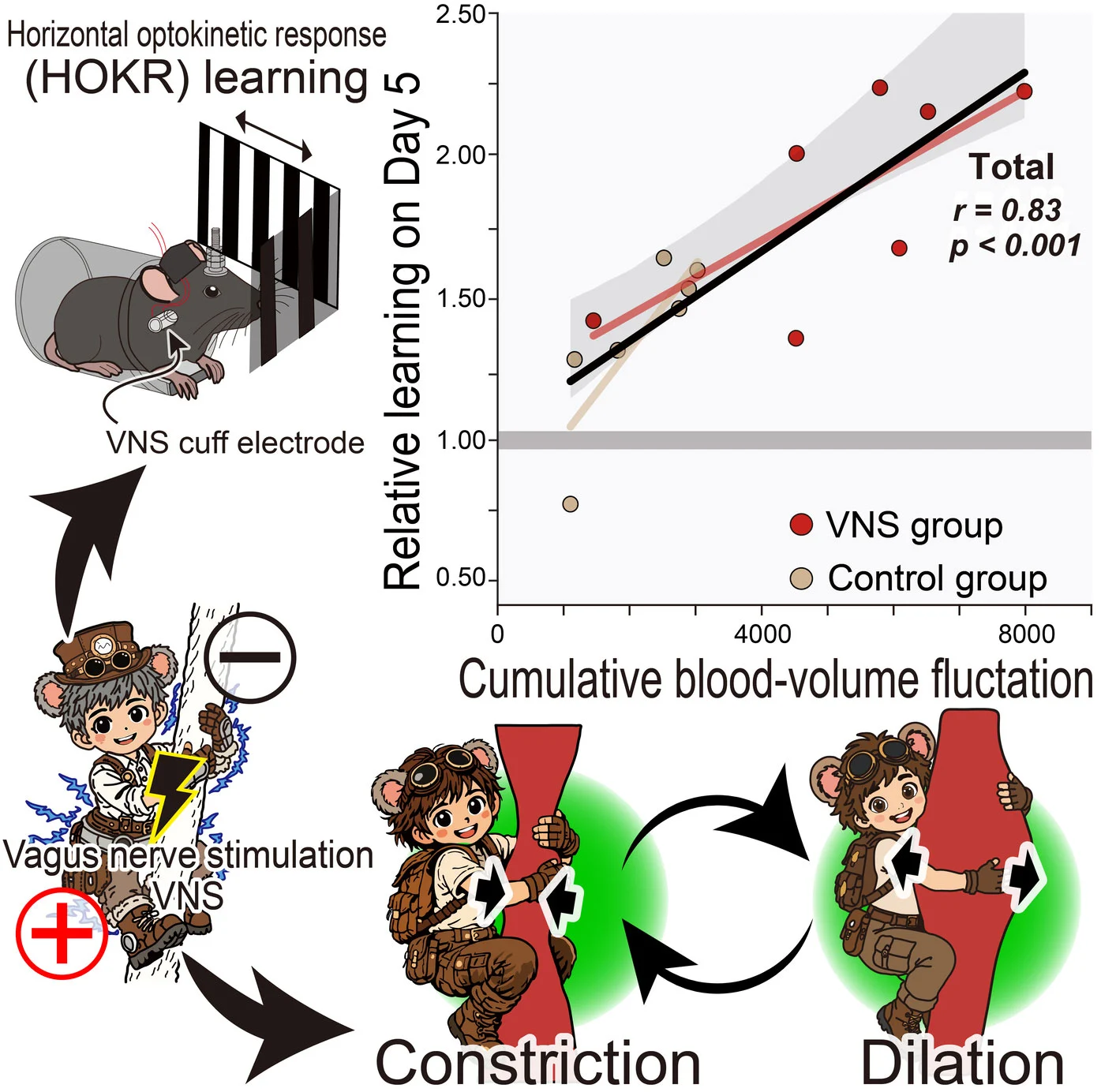
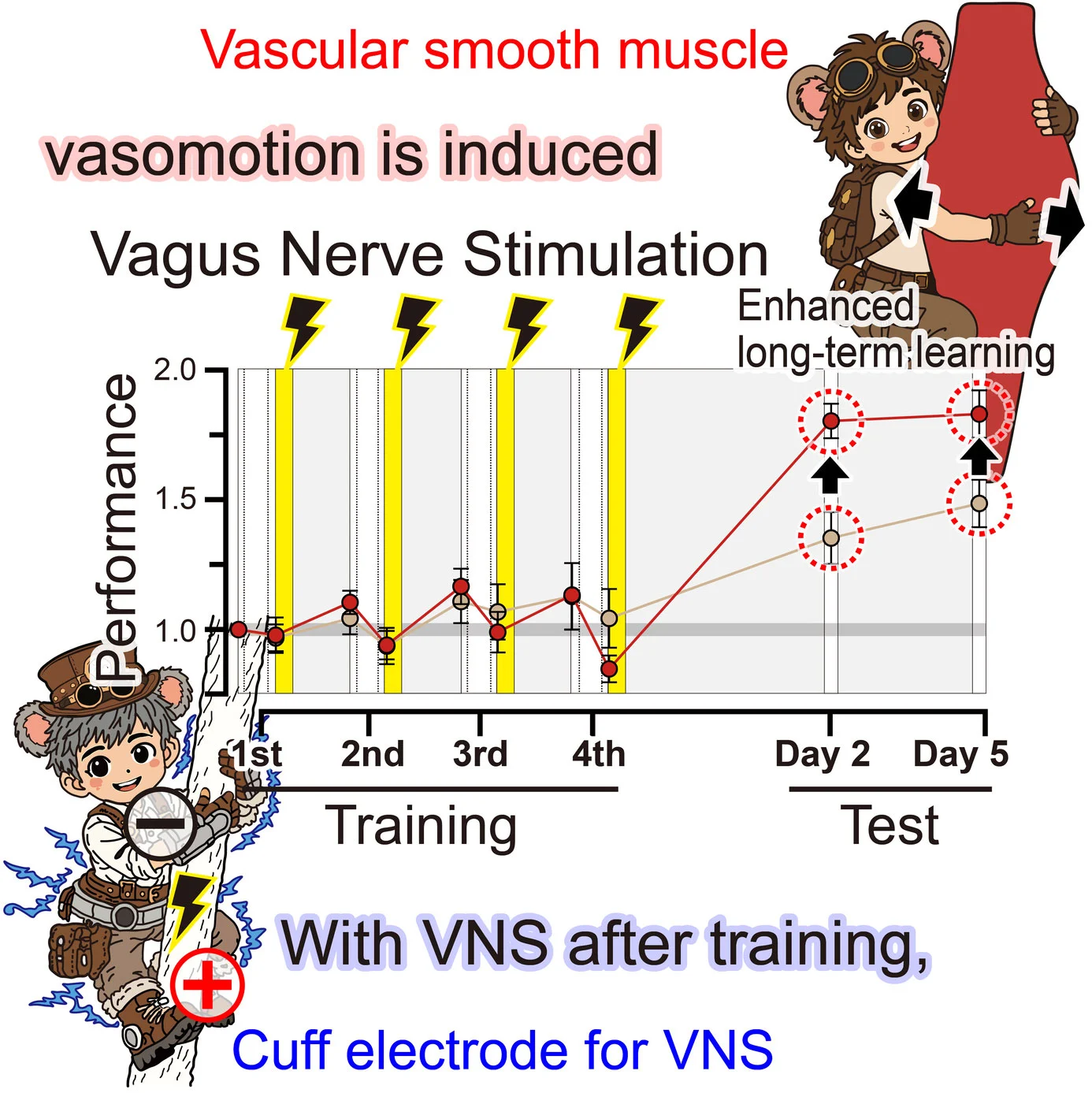
In the experiment, the researchers implanted micro-cuff electrodes into the vagus nerve in the left neck of mice and trained them on cerebellum-dependent horizontal optokinetic response eye movements. This task requires the mice to track moving stripes more accurately, similar to the voluntary eye movements of people standing on the platform and watching the passing train carriages. It is worth noting that the scientific research team only applied vagus nerve stimulation after each training session. Stimulation did not lead to an immediate improvement in performance when the mice practiced, but its benefits gradually emerged in subsequent tests, and the mice that received stimulation retained significantly stronger long-term learning and memory for several days.
The research team pointed out that this result indicates that post-training neural stimulation targets the process responsible for protecting and consolidating motor memory after practice, rather than directly assisting current task performance. Professor Hiroshi Matsui of Tohoku University said that the core of the experiment is that the stimulation was only performed after training, which suggests that vagus nerve stimulation may open a potential window of opportunity to improve learning by making the brain microenvironment more receptive to long-term changes.
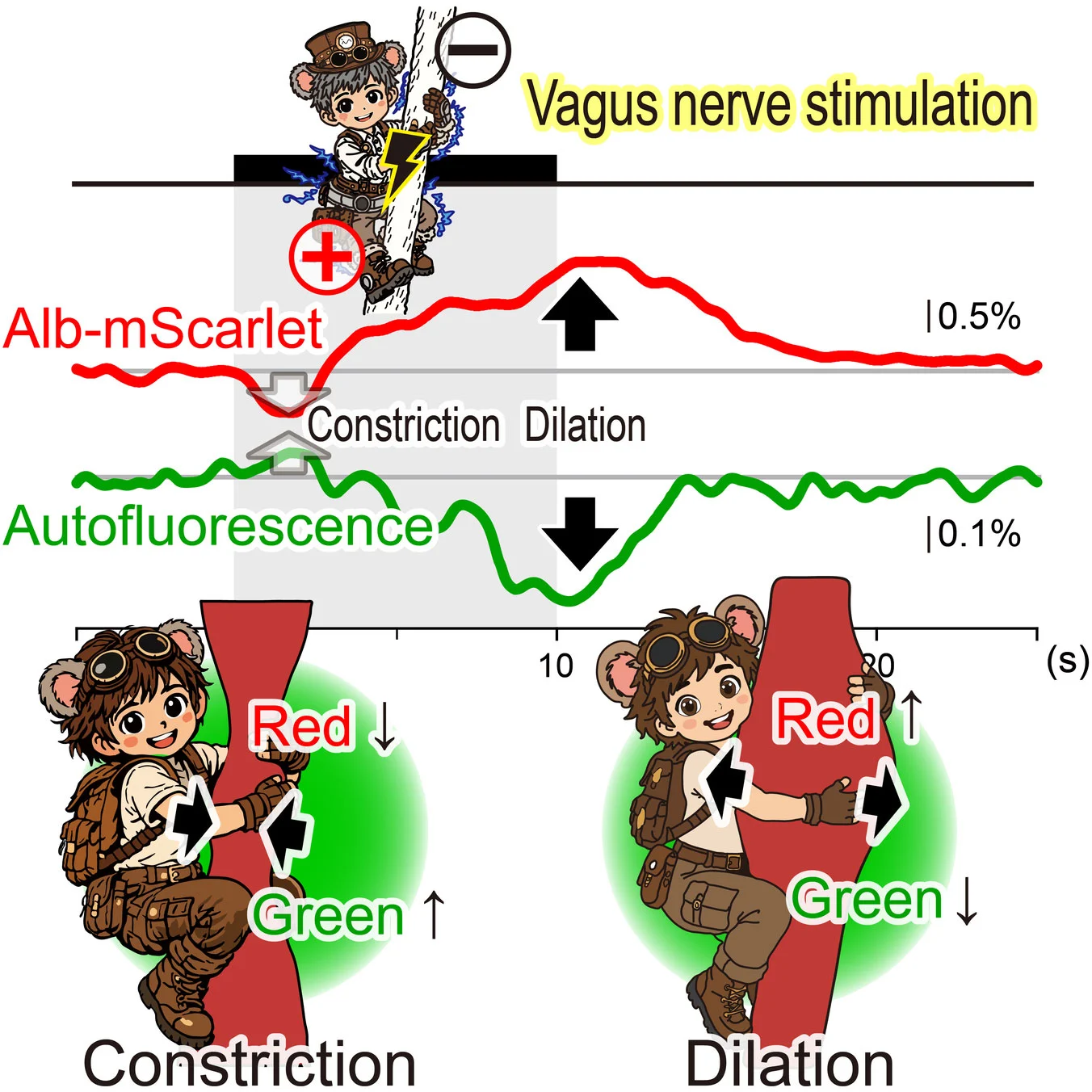
In order to explore the underlying physical and physiological mechanisms, the research team used fiber photometry to measure the dynamic changes in blood volume near the cerebellar flocculus area that is closely related to the learning task. Monitoring found that a single vagal nerve stimulation can trigger a biphasic response in cerebral blood vessels, that is, a delayed increase in local blood volume after a brief decrease. Repeated stimulation induces rhythmic oscillations in local blood volume. The amplitude of this blood flow fluctuation was also crucial. Mice that showed greater amplitude of blood vessel oscillations tended to show better memory retention in the learning test on the fifth day.
This association suggests that vagus nerve stimulation may aid memory consolidation in part by reshaping the metabolic environment around regulated brain circuits during training. Chen Junyu, the first author of the paper, said that the human brain may be far more profoundly affected by the body's internal state than people imagine. By regulating the brain's metabolic environment, including rhythmic vascular movement, it may be possible to stimulate learning potential that is originally dormant in the future. The research team will continue to optimize the stimulation protocol and further clarify the mechanism of the brain-body axis in supporting long-term neuroplasticity.
Comments